
Global buyers entering the 2026 Dinosaur Fossils market need more than enthusiasm. They need evidence, patience, and careful judgment. A polished display piece may hide unclear ownership, restoration, or incomplete documentation. Provenance matters.
Dr. Jack Horner, a leading paleontologist, has often emphasized, “Dinosaurs are not extinct. They are alive and well in birds.” His observation encourages buyers to view fossils as scientific evidence, not merely decorative objects. This guide examines notable Dinosaur Fossils for collectors, museums, educators, and responsible dealers. It considers scientific importance, preservation quality, preparation methods, market demand, and documentation. Small details can change the assessment. Look for stable bone surfaces, visible matrix, repaired fractures, and consistent preparation marks. A fossil with natural texture may be more valuable than a flawless-looking specimen.
Quality is not everything.
Legal and ethical checks remain essential. Buyers should request excavation records, ownership history, export documents, and independent expert opinions. Requirements vary between countries and may change over time. Some specimens may be protected cultural property or subject to strict heritage rules. Never assume that a seller’s certificate proves lawful trade. That assumption is risky.
This overview is useful, but it is not perfect. Fossil pricing can shift quickly, and identification disputes still occur among specialists. Even experienced collectors sometimes miss restoration. That is why transparent records and third-party review should guide every serious purchase. The strongest 2026 selections combine scientific value, honest disclosure, and responsible international handling.
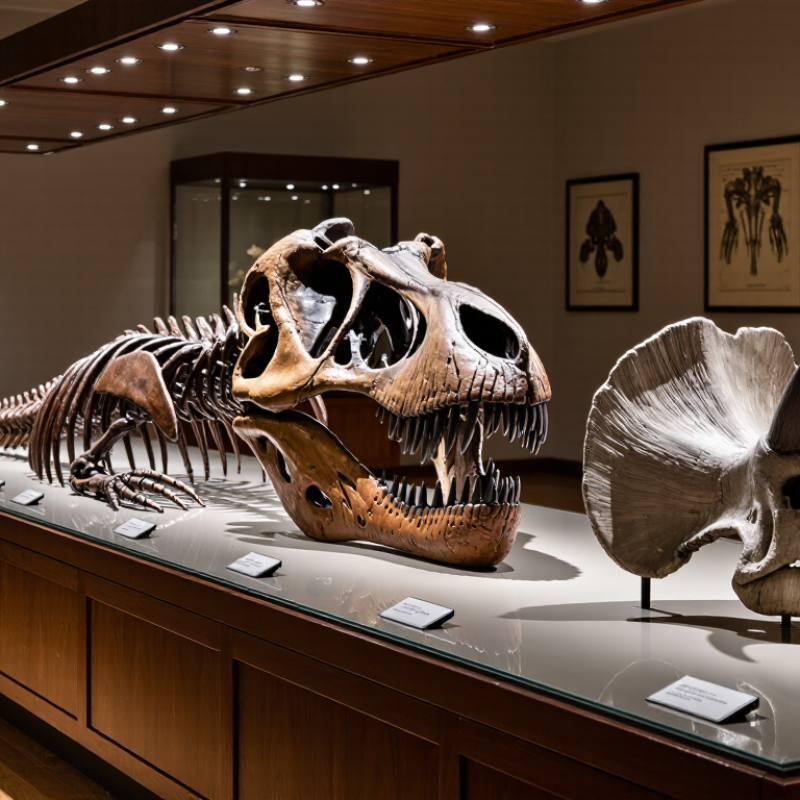
Dinosaur fossils are more than polished bones in display cases. They are mineralized remains or traces of ancient animals, preserved through burial, pressure, and chemical change. A fossil may include teeth, eggshell, skin impressions, footprints, or a delicate plant imprint. Each specimen records a moment from a vanished ecosystem.
In 2026, fossils matter because modern research can read them in greater detail. CT scanning may reveal hidden structures without cutting a specimen. Microscopic analysis can examine bone growth, disease, and diet. Chemical testing may provide clues about ancient environments. These methods help scientists study evolution, climate change, migration, and predator behavior. A fossil also gives students a physical connection to deep time.
For global buyers, reliability begins with documented origin. Clear locality records, legal export papers, and an unbroken ownership history deserve careful attention. Responsible dealers should explain restoration, reconstruction, and scientific limits honestly. Some pieces look complete because missing parts were added. That is not always wrong, but it must be disclosed. Even specialists can disagree about age or classification. The difficult part is accepting uncertainty. A beautiful specimen with weak records may teach less than a modest fossil with strong evidence. Ethical purchasing supports research, protects cultural heritage, and keeps important material available for future study.
Dinosaur fossils fall into several practical categories. Partial skeletons remain the most common museum-quality option. They may include vertebrae, ribs, limbs, or pelvis sections. Complete skeletons are rare and require stronger documentation. The Paleobiology Database’s 2024 release records millions of fossil occurrences, yet only a small fraction represents commercially documented dinosaur material.
Teeth and claws attract collectors because their shapes are easy to examine. However, isolated pieces can be difficult to identify without precise locality records. Eggs and eggshell fragments offer visible textures and nesting clues. Coprolites, or fossilized dung, provide unusual evidence about ancient diets. Trackways show movement, speed, and group behavior. Their value depends heavily on scientific context and preparation quality.
Skin impressions, bone fragments, and mounted displays also appear in global trade. Some mounts contain modern supports or reconstructed sections. That detail should be clearly stated. The Society of Vertebrate Paleontology’s ethical guidance emphasizes accurate labeling, legal excavation, and documented ownership history. Buyers should request photographs, specimen dimensions, preparation notes, and export permits where required. Commercial market reports often combine dinosaur fossils with broader natural-history collectibles, so their totals can be misleading. I would not treat a high price as proof of authenticity. Even expert identifications can change. Provenance remains essential.
For global dinosaur fossil buyers in 2026, authentication begins with documented provenance, not dramatic appearance. A valid record should identify the find location, geological formation, collection history, export permits, and ownership transfers. Provenance matters.
Scientific teams then examine the specimen’s anatomy, matrix, preparation marks, and stratigraphic context. Microscopy can reveal modern adhesives, artificial fractures, or mismatched bone surfaces. Stable-isotope testing may support geographic and environmental interpretation, but it rarely proves authenticity alone. The Paleobiology Database contains more than 1.4 million fossil occurrence records, offering researchers a valuable comparison framework for taxonomy, age, and locality data. Records beat appearance.
Reliable documentation includes scale photographs, three-dimensional scans, preparation notes, accession numbers, and independent specialist opinions. A laboratory report should state its methods, sample limits, uncertainty, and chain of custody. The Society of Vertebrate Paleontology’s ethical guidance emphasizes scientific context and responsible collecting. UNESCO’s 1970 cultural-property framework now involves more than 140 participating states, showing why cross-border paperwork deserves serious attention.
I have seen impressive specimens with incomplete histories. That weakness cannot be repaired by a glossy certificate. Buyers should ask whether every claim is independently testable. Mistakes happen. Even experienced researchers can misidentify a fragment or overstate a restoration. A careful report should leave room for revision, especially when new imaging or comparative material appears. Authentication is not a single stamp; it is a transparent, reviewable process.
The chart compares the approximate duration of the three dinosaur-bearing geologic periods. Geological age alone cannot authenticate a specimen. A scientifically documented fossil should also have recorded provenance, excavation context, stratigraphic position, chain of custody, preparation history, high-resolution photographs, measurements, and an independent specialist assessment. The time ranges are approximate values based on the International Chronostratigraphic Chart: Triassic 252.17–201.4 Ma, Jurassic 201.4–145.0 Ma, and Cretaceous 145.0–66.0 Ma.
2026 Top Dinosaur Fossils for Global Buyers
Fossil quality begins with preservation, not size. Clear bone texture, stable mineralization, and limited repair support stronger evaluations. Cracks matter. Tiny fractures can expand during transport or display. A skilled preparator should document every filled area and restored section.
Rarity also shapes demand. A complete skeleton is uncommon, but completeness alone does not guarantee importance. Species, geological age, locality, and scientific significance can change market interest. A rare specimen with poor preservation may attract less attention than a well-preserved, identifiable fragment. Context matters greatly.
Market value depends on evidence and trust. Buyers should request detailed photographs, preparation records, ownership history, and export documentation. Independent specialists can assess authenticity, restoration, and taxonomic identification. No grading system is flawless. Even experienced reviewers may disagree when preparation hides original surfaces. I have found that cautious buyers ask uncomfortable questions before discussing price. That habit protects both money and scientific credibility. Legal requirements vary between countries, so every transaction should follow applicable cultural heritage, import, export, and customs rules. A low price is not always an opportunity. Sometimes, it signals missing evidence.
| Fossil Category | Geological Age | Typical Market Specimen | Relative Rarity | Quality Indicators | Indicative Value Range (USD) | Key Value Drivers |
|---|---|---|---|---|---|---|
| Tyrannosaurid Teeth | Late Cretaceous approximately 100–66 million years ago | Isolated tooth, often 2–8 cm; larger complete teeth are less common | Moderate to high | Sharp tip, intact serrations, natural enamel, limited restoration | $150–$15,000+ | Tooth length, completeness, enamel color, serration preservation, verified locality, and restoration disclosure |
| Triceratops Elements | Late Cretaceous approximately 69–66 million years ago | Horn, frill section, skull fragment, tooth, or partial skeleton | Moderate | Recognizable anatomy, stable bone, minimal reconstruction, clear excavation record | $500–$250,000+ | Element size, three-dimensional preservation, completeness, diagnostic features, and legally transferable provenance |
| Hadrosaur Bone and Partial Skeletons | Late Cretaceous approximately 84–66 million years ago | Individual limb bones, vertebrae, or articulated partial skeletons | Moderate | Articulation, low distortion, sound cortical bone, documented preparation | $1,000–$150,000+ | Skeletal completeness, articulation, size, scientific information, preparation quality, and export eligibility |
| Sauropod Vertebrae and Limb Bones | Late Jurassic to Late Cretaceous approximately 163–66 million years ago | Large vertebra, limb bone, or partial skeleton from a long-necked dinosaur | Moderate to high | Large size, three-dimensional form, low infill, stable matrix, clear anatomy | $2,000–$200,000+ | Exceptional size, completeness, articulation, taxonomic identification, preparation difficulty, and display appeal |
| Dromaeosaurid Teeth and Claws | Late Cretaceous approximately 100–66 million years ago | Small teeth, manual claws, or pedal claws | High | Intact curvature, preserved enamel or sheath impression, limited filling and retouching | $300–$25,000+ | Authenticity, rarity of the anatomical element, size, surface preservation, and complete legal history |
| Spinosaurid Teeth | Early to Late Cretaceous approximately 145–66 million years ago | Conical tooth, often with longitudinal ridges and a robust root | Moderate | Complete crown, visible ridges, natural color, stable root, minimal repair | $75–$5,000+ | Crown height, ridge definition, completeness, locality, preparation, and restoration percentage |
| Dinosaur Eggshell and Egg Fragments | Mostly Late Cretaceous approximately 100–66 million years ago | Shell fragments, partial eggs, or nest-associated material | Moderate to high | Original shell texture, undistorted curvature, nest context, and documented recovery | $100–$10,000+ | Egg completeness, species or oospecies identification, nest association, shell preservation, and jurisdictional restrictions |
| Small Dinosaur Trackways and Track Slabs | Triassic to Cretaceous approximately 252–66 million years ago | Single footprint, multiple-track slab, or documented trackway section | High | Sharp digits, natural sediment surface, low restoration, and reliable site documentation | $1,000–$100,000+ | Number of tracks, scientific context, footprint clarity, slab size, rarity, and legal collection status |
| Exceptional Partial Dinosaur Skeletons | Jurassic to Cretaceous approximately 201–66 million years ago | Multiple associated bones or an articulated partial skeleton | Very high | High completeness, articulation, anatomical integrity, professional preparation, and strong provenance | $100,000–$1,000,000+ | Taxonomic importance, completeness, articulation, preservation, excavation history, scientific access, and export permissions |
| Tyrannosaurid Partial Skeletons | Late Cretaceous approximately 85–66 million years ago | Associated teeth, skull elements, vertebrae, limbs, or partial skeleton | Extremely high | Diagnostic anatomy, substantial original bone, low reconstruction, expert preparation, documented chain of title | $250,000–$5,000,000+ | Exceptional rarity, scientifically important anatomy, completeness, authenticity, legal title, and public or institutional access considerations |
International fossil purchases require documented legal origin. UNESCO’s Convention database records more than 150 States Parties to the 1970 Convention. However, each country may apply separate rules for excavation, ownership, export, and import.
A sales invoice is not enough. Buyers should request the specimen’s scientific identification, exact locality, excavation date, ownership history, and official export documents. Import requirements should also be confirmed with the destination country’s customs authority.
Clear records protect both buyers and collections. For high-value material, an independent paleontological assessment can identify repairs, composites, or reconstructed sections.
This step is often skipped. That is a mistake. Professional museum practice also favors stable storage, limited handling, and protection from ultraviolet light.
Conservation guidance commonly used by natural-history institutions recommends moderate, steady conditions, often around 18–22°C and 40–55% relative humidity, depending on the fossil’s minerals and matrix.
Packing needs equal care. Use inert foam, archival tissue, and a rigid box with no movement inside.
Never attach labels directly to fragile surfaces. Keep photographs, permits, condition notes, and treatment records together.
Requirements can change, and I may be overly cautious, but undocumented provenance can make a scientifically important fossil impossible to exhibit, insure, or transfer legally.
