Top Round Counter Stools for Kitchen Islands?
Round Counter Stools can make a kitchen island feel inviting, but the right choice depends on more than appearance. Seat height, footrest position, swivel clearance, and upholstery all affect daily comfort. A stool that looks elegant beneath a stone counter may feel awkward after ten minutes—or block a busy walkway.
Houzz’s 2024 U.S. Kitchen Trends Study documents homeowners’ kitchen renovation choices, while the National Kitchen & Bath Association’s 2024 Kitchen Trends Report tracks professional design priorities. These reports offer useful context for island planning. They do not, however, provide a tested ranking of round counter stools. That distinction matters. A trend is not proof of comfort, durability, or fit.
Small details matter. Measure the counter before shopping. Leave room for knees, passing feet, and the stool’s full swivel. Check whether the seat fabric can handle crumbs and the occasional splash. Then compare frame stability, weight capacity, and the ease of cleaning.
A source note is important here: no verifiable, named Round Counter Stools specialist or attributable quotation was supplied for this topic. Rather than inventing one, this guide focuses on measurable features and clearly identified design considerations. Some advice remains a starting point, not a guarantee; body proportions and island layouts vary. The best choice is the one that fits your counter, your household, and the way you actually use the kitchen.
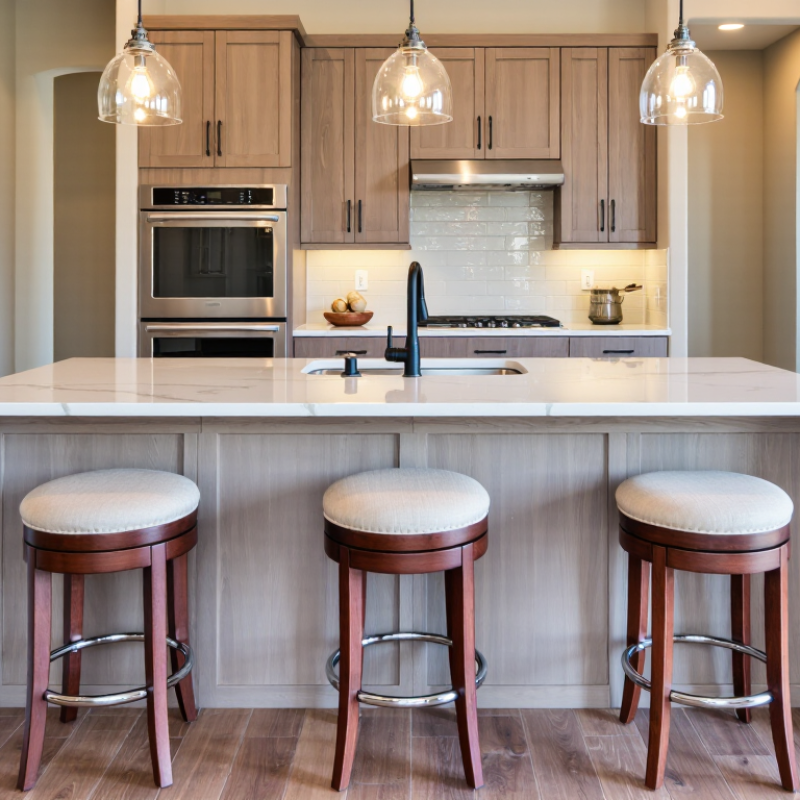
What Defines a Round Counter Stool for a Kitchen Island
What Defines a Round Counter Stool for a Kitchen Island
A round counter stool is shaped for everyday seating at a kitchen island, with a circular seat and a height that suits the counter. “Counter height” is not universal, so measure from the floor to the underside of the island before choosing. A seat roughly 9 to 12 inches below the counter often leaves useful legroom, but the exact fit depends on the counter and the person sitting there. Measure before buying.
The round seat can make it easier to turn and tuck stools beneath an overhang, especially in a compact kitchen. Check the base as well as the seat: a wide pedestal may feel stable but take up more floor space. A footrest gives legs a place to rest, while a backrest can help during longer meals. Small details matter. In daily use, I’ve found that a stool that looks slim can still crowd a walkway once people pull it out.
Think about spacing, too. Leave enough room for elbows and for someone to pass behind seated guests; the right gap depends on the stool’s width and the island’s layout. Upholstered seats may feel softer, while wood or other firm surfaces are often easier to wipe clean. There is no perfect combination. A swivel seat sounds convenient, but it can feel fussy if nearby stools bump into one another. Check the measurements in your actual kitchen, not just in a product photo.
What Defines a Round Counter Stool for a Kitchen Island?
A round counter stool combines a circular seat with dimensions suited to counter-height seating. These typical planning ranges can help guide selection and placement; exact needs vary with the island and the people using it.
Ranges are shown in inches. Allow roughly 10–12 inches between the countertop and the seat for legroom, and check the stool’s overall width when planning spacing.
How to Match Stool Height to Island Dimensions
A stool can look right online and still feel awkward at the island. Measure from the floor to the countertop, then subtract about 10 to 12 inches for comfortable knee space. A standard 36-inch kitchen counter usually pairs well with a 24- to 26-inch seat. For a taller, 42-inch bar-height island, look for seats around 28 to 30 inches high. Measure twice.
Round counter stools suit compact kitchens because their curved edges are easy to move around. Still, check the seat diameter, not just its height. Allow roughly 24 to 26 inches of island width per stool, and leave extra room if seats have arms. A wide, round seat may crowd the next person, even when the island seems long enough on paper. Don’t forget the overhang: a deep counter edge gives knees more room, while a shallow one can make the perfect-height stool uncomfortable. Small differences matter. If possible, test the seat at the island; a tape measure cannot tell you whether the footrest feels natural. I’d rather choose a slightly simpler stool that fits the dimensions than force a stylish one into a cramped layout.
Top Round Counter Stools for Kitchen Islands? - How to Match Stool Height to Island Dimensions
| Island Height | Suggested Stool Seat Height | Typical Round Seat Diameter | Space Between Stool Centers | Practical Fit Notes |
| 34 in (86 cm) | 22–24 in (56–61 cm) | 14–16 in (36–41 cm) | 24–26 in (61–66 cm) | A lower counter-height stool can suit a 34 in island. Check the finished countertop height before choosing. |
| 36 in (91 cm) | 24–26 in (61–66 cm) | 14–18 in (36–46 cm) | 24–26 in (61–66 cm) | This is a common counter-height pairing. Leave about 10–12 in (25–30 cm) from the seat top to the underside of the counter. |
| 40 in (102 cm) | 28–30 in (71–76 cm) | 14–18 in (36–46 cm) | 24–26 in (61–66 cm) | A bar-height seat usually fits a 40 in surface. Confirm that the stool’s footrest and legs fit comfortably under the overhang. |
| 42 in (107 cm) | 30–32 in (76–81 cm) | 14–18 in (36–46 cm) | 24–26 in (61–66 cm) | For a taller bar surface, measure the seat height rather than relying on labels such as “counter” or “bar.” |
| Any height with a thick countertop or apron | Choose to maintain 10–12 in (25–30 cm) of seat-to-counter clearance | Measure the stool at its widest point | Allow extra room for arms or broad seats | Measure from the floor to the underside of the counter. A deep apron can reduce legroom even when the top height seems suitable. |
Quick guide: Measure the finished island surface, then subtract roughly 10–12 in (25–30 cm) to estimate a comfortable stool seat height. For planning, allow about 24–26 in (61–66 cm) of island length per stool; wider or arm-equipped stools may need more space.
What Comfort and Safety Features to Compare
For a kitchen island, comfort starts with the right seat height. A stool that leaves knees pressed against the counter quickly becomes irritating. For a typical 36-inch-high counter, a 24–26-inch seat is a practical starting range; measure your own island before buying. The National Kitchen & Bath Association’s Kitchen Planning Guidelines allow 24 inches of counter width per seated person and recommend 15 inches of knee space at a 36-inch counter. Those figures help compare how freely diners can sit, though they cannot account for every body type. A supportive back and a footrest that meets the sitter’s feet matter, too. Small details. Check the footrest’s edges for smoothness.
Safety deserves a close look, especially on hard kitchen floors. Choose a broad, stable base and feet that grip without scratching; test the stool on your actual flooring if possible. A swivel can make getting in and out easier, but it should rotate smoothly and feel secure under load. Compare the stated weight limit with the manufacturer’s testing information, not appearance alone. ANSI/BIFMA X5.4 provides strength, stability, and durability tests for public and lounge seating; it is a useful comparison point, not proof that every kitchen stool has been tested to that standard. One overlooked issue: a stool can feel solid when empty yet wobble when someone shifts sideways. Sit, turn, and gently press the footrest before deciding.
How to Choose Among Top Round Counter Stool Styles
Top Round Counter Stools for Kitchen Islands?
Choosing among round counter stool styles starts with the island’s height and your available floor space. Measure from the floor to the counter’s underside, then allow roughly 9 to 12 inches between the seat and counter for legroom. Many standard counters pair well with seats about 24 to 26 inches high, but measuring your own island is more reliable. Measure twice.
Backless round stools tuck neatly under an overhang and keep a small kitchen visually open. They can be less comfortable for long meals, though. A low-back style offers some support without dominating the room, while a padded seat may feel better during slow breakfasts. Consider the covering, too: spills and crumbs are part of kitchen life, so a wipeable surface can be practical. Comfort matters. It is tempting to choose by silhouette alone, but that shortcut can overlook everyday use.
The base changes how a stool feels and fits. Four legs can provide a familiar, stable stance, while a pedestal base may make it easier to slide in from different angles. Swivel seats are convenient, but check that they do not bump nearby cabinets or stools. Before buying, test the seat height and footrest position if possible. Sit as you would during a meal, not just for a quick glance. A stool that looks right online may feel awkward at your island.