
Choosing the right China supplier is essential for global buyers seeking reliable Animatronic Dinosaurs. These machines must impress visitors while surviving daily operation, transport, weather, and repeated movement. A professional supplier should understand mechanical design, sculpting, electronics, waterproofing, and visitor safety. It should also provide clear specifications, production photos, testing records, and responsive after-sales support.
Stan Winston, the legendary special-effects designer behind many memorable creature effects, said, “The audience will accept anything as long as you give them enough detail.” His words remain highly relevant today. Realistic skin texture, carefully shaped teeth, balanced walking motion, and synchronized roaring can transform a park display into a convincing prehistoric experience. Small details matter.
However, visual quality alone is not enough. A supplier may show an impressive showroom model, yet provide weak documentation or inconsistent communication. Buyers should examine motor brands, control systems, steel structures, foam density, silicone finishing, and maintenance access. Ask for videos of complete movement cycles, not only edited highlights. Check how the supplier handles revisions.
There can be imperfections. Delivery schedules may shift, colors may differ slightly, and outdoor environments can expose hidden weaknesses. Honest suppliers explain these risks before signing an order. That honesty builds confidence.
China has become a major manufacturing base for Animatronic Dinosaurs because it combines skilled labor, flexible customization, and competitive production capacity. Still, low price should never be the only measure. The strongest partnership comes from practical engineering, transparent communication, verified experience, and a willingness to improve each project. For global buyers, that is the difference between purchasing a decoration and investing in a dependable attraction.
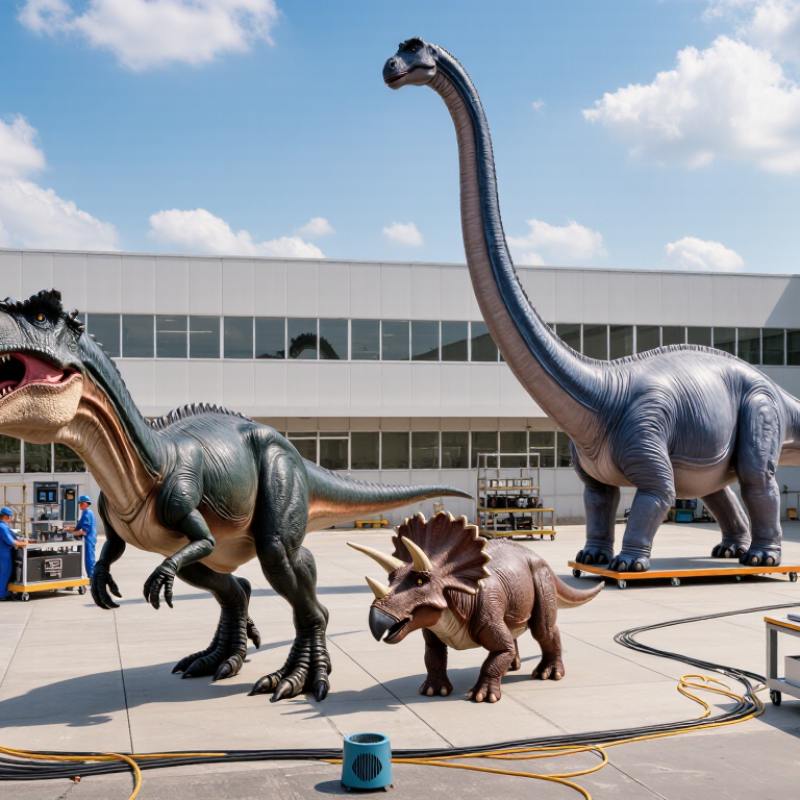
China has become a central manufacturing base for the global animatronic dinosaur industry. Grand View Research estimated the global animatronics market at about USD 9.6 billion in 2023. China contributes through mechanical design, silicone molding, control systems, painting, and export logistics.
The demand is visible in visitor numbers. The TEA/AECOM 2023 Global Experience Index reported nearly 244 million visits across the world’s top 25 theme parks. Dinosaurs attract families because they combine education, movement, and photography. Chinese suppliers support this demand with outdoor models, museum displays, and interactive park installations. Factory experience matters here. A dinosaur standing under direct sunlight needs stronger coatings, sealed joints, and safer cable routing.
Production quality is not uniform. It depends on testing, documentation, and communication. Suppliers with engineering teams can adjust walking speed, roar volume, skin texture, and maintenance access for different climates. Export buyers should request load tests, waterproofing records, control-system instructions, and spare-part plans. Short videos are useful, but they cannot replace a physical inspection. Not every low-cost quote is efficient. Sometimes, it only moves costs into repairs. This remains a weakness in the industry. China’s role is expanding, yet reliable delivery still requires careful factory evaluation, transparent specifications, and realistic installation planning.
Selected global manufacturing and toy-industry indicators relevant to animatronic dinosaur sourcing
China’s strong manufacturing base, dominant position in global toy exports, and extensive export logistics network support its role as a major production center for large interactive models, including animatronic dinosaurs. The figures are broad industry indicators rather than company-specific or product-specific market shares.
Sources: UNIDO industrial statistics, WTO merchandise trade data, and UNCTAD maritime transport indicators. Latest broadly reported figures available for the respective indicators.
A reliable Chinese animatronic dinosaur supplier offers more than attractive showroom models. Experienced buyers should inspect production details, not only finished photographs. Ask about steel frame thickness, motor protection, silicone durability, movement limits, and sound system quality. A dependable factory can provide testing videos, material specifications, inspection records, and clear production schedules. These details reveal practical expertise.
Communication also matters. Reliable suppliers answer technical questions directly and explain possible limitations. They should confirm installation conditions, power requirements, safety controls, packaging methods, and replacement-part support. Request a sample contract with warranty terms and delivery responsibilities. A serious supplier accepts independent inspections before shipment. That builds trust. No factory is perfect, however. Some suppliers may underestimate installation time or outdoor maintenance needs. Honest discussion of these weaknesses is more valuable than exaggerated promises.
Tips: Visit the production site when possible, or arrange a live video inspection. Check several moving parts during testing, including jaw, neck, tail, and eyes. Ask for a packed-crate demonstration. Review customer references from similar climates and project sizes. Keep written records of every specification. A small detail, such as cable length, can affect installation. Also confirm whether local technicians can receive remote guidance. Reliable cooperation depends on evidence, careful questions, and consistent follow-up.
Animatronic dinosaurs come in several practical types for different visitor experiences. Small models suit indoor exhibitions, school displays, and retail attractions. Large outdoor dinosaurs create stronger visual impact in parks, museums, and family entertainment venues. Common choices include Tyrannosaurus rex, Triceratops, Velociraptor, and long-necked herbivores. Each species needs different proportions, movement ranges, and sound effects.
Motion systems may include head turning, jaw movement, blinking eyes, tail motion, breathing, and walking effects. A steel frame supports the body, while sculpted foam and silicone create textured skin. Outdoor models require sealed control boxes, drainage planning, and UV-resistant coatings. Indoor models can focus more on detail and interactive sensors. These differences affect transport, installation, power use, and long-term maintenance.
A reliable supplier should provide movement testing, wiring diagrams, installation guidance, and replacement-part support. Buyers should confirm doorway sizes, ground conditions, voltage standards, and local safety requirements before production. I have found that sound often feels impressive during testing but becomes too loud near children. Outdoor joints can also wear faster than expected. That detail deserves honest planning. Some displays need quieter motion and simpler controls, not more effects. Regular inspections help protect visitors and preserve realistic movement.
For global buyers, an animatronic dinosaur is more than a moving display. It is a mechanical product requiring documented quality control. Experienced buyers request material samples, welding photos, wiring diagrams, and factory inspection records.
They also check whether the supplier tests motors, joints, sensors, and control systems before shipment. Small details matter. A loose cable can stop a complete exhibition.
Safety evaluation should cover both visitors and operators. Buyers commonly review emergency-stop switches, low-voltage components, waterproof protection, stable bases, and accessible maintenance points.
Outdoor models need sealed electrical cabinets and tested surface coatings. Indoor models still require secure movement zones and clear operating instructions. Compliance documents should match the destination market, not merely show generic certificates. This part is often underestimated.
Customization begins with a usable brief. It should define dinosaur species, dimensions, movement range, sound level, skin texture, color, climate, and installation location.
Skilled suppliers can convert sketches into structural drawings and explain practical limits. A larger head may look impressive, but it can increase balance problems and transport costs. Not every request should be accepted unchanged.
Prototype adjustments are normal, and a reliable supplier records them clearly before production. Buyers should ask for testing videos, inspection checkpoints, spare-parts plans, and responsive technical support.
Some finishing details may still need correction after the first sample. That is not automatically failure; hiding the issue is worse.
China Best Animatronic Dinosaurs Supplier for Global Buyers
Ordering begins with accurate site information. Share dinosaur size, movement requirements, display location, climate, voltage, and visitor access. A professional supplier should provide drawings, material details, production photos, and a clear quotation. Confirm what the price includes, such as control systems, wooden crates, spare parts, and testing. Never rely on attractive images alone. Ask for inspection videos before shipment.
Tips: Request a written timeline with production, testing, packing, shipping, customs, and installation dates. Check crate dimensions against your doorway and storage area. Small oversights can create expensive delays. Sea freight often requires careful moisture protection, while air freight may suit smaller components. Confirm shipping documents, insurance responsibilities, and import requirements with a qualified local agent. Delivery is not complete until every crate is checked for damage.
Installation needs more than a manual. The supplier should provide wiring diagrams, foundation guidance, safety instructions, and remote technical support. For large outdoor dinosaurs, installers must check anchoring, drainage, wind exposure, and cable protection. After-sales service should include warranty terms, troubleshooting steps, replacement-part availability, and response times. Keep photos and serial records for each unit. One practical lesson is simple: even a careful plan may miss local weather conditions. A small spare-parts kit and a live video session can prevent a long closure. Expect adjustments after installation; realistic support matters more than perfect promises.
| Project Stage | Key Buyer Requirement | Typical Process and Deliverables | Practical Reference Information |
|---|---|---|---|
| 1. Product Selection | Choose dinosaur type, size, movement, sound, and finish | Review product drawings, dimensions, movement functions, sound effects, color references, power requirements, and intended installation environment. | Common animatronic dinosaur lengths range from approximately 3 to 20 meters, depending on the model and design. |
| 2. Technical Confirmation | Confirm site conditions and safety requirements | Share installation drawings, access limitations, indoor or outdoor conditions, ground type, electrical supply, drainage, visitor distance, and local safety requirements. | Outdoor displays generally require weather-resistant materials, secure anchoring, suitable drainage, and protection for electrical connections. |
| 3. Quotation and Contract | Clarify price, scope, payment, and responsibilities | The quotation should identify the dinosaur model, size, included functions, packaging, documentation, delivery terms, installation scope, spare parts, and warranty conditions. | International purchase terms should clearly define the agreed Incoterm, currency, delivery destination, and customs responsibilities. |
| 4. Production | Manufacture and quality inspection | Production normally includes structural fabrication, mechanical and electrical assembly, sculpting, painting, programming, movement testing, sound testing, and final inspection. | A typical custom production schedule is about 30–60 calendar days after technical approval; complex projects may require more time. |
| 5. Pre-Shipment Approval | Verify the finished product before dispatch | Request photos, videos, packing lists, electrical specifications, operating instructions, spare-parts information, and a functional test before shipment. | Written approval of color, dimensions, functions, and packaging helps reduce misunderstandings in customized orders. |
| 6. Export Packaging | Protect components during international transport | Large dinosaurs are commonly separated into transportable sections. Suitable packaging may include steel frames, reinforced wooden cases, moisture protection, labels, and component identification. | Final package quantity, dimensions, and gross weight depend on the model, disassembly method, and selected transport equipment. |
| 7. International Shipping | Select a suitable transport method | Sea freight is generally used for oversized or heavy displays. Air freight may be considered for small parts or urgent accessories. The buyer should confirm port, destination, customs, insurance, and inland delivery arrangements. | Ocean transit time varies by route and port conditions; approximately 20–45 days is a common planning range, excluding customs and inland delivery. |
| 8. Customs Clearance | Prepare accurate import documentation | Typical documents may include a commercial invoice, packing list, bill of lading or air waybill, certificate of origin where applicable, and product specifications. | Import duties, taxes, permits, inspection requirements, and classification rules vary by destination country and should be confirmed locally. |
| 9. Site Preparation | Prepare a safe and accessible installation area | Complete the foundation or mounting surface, power supply, drainage, access route, lifting equipment, tools, barriers, signage, and required permits before installation begins. | The foundation design should follow the equipment drawings and local construction requirements, especially for large outdoor displays. |
| 10. Installation and Testing | Assemble, connect, calibrate, and test the display | Installation may include section assembly, anchoring, electrical connection, controller setup, sensor calibration, movement adjustment, sound testing, and operator training. | On-site installation commonly takes about 1–5 working days for a small or medium display, depending on quantity, site readiness, and complexity. |
| 11. Operation and Maintenance | Keep the exhibit safe and functional | Follow the operating manual, inspect exposed fasteners and cables, keep electrical areas dry, clean the surface with suitable materials, and stop operation if abnormal noise or movement occurs. | Outdoor units should receive regular checks after heavy rain, strong wind, extreme temperatures, or extended periods without operation. |
| 12. Warranty and Support | Handle faults, spare parts, and technical questions | Support arrangements should specify response channels, troubleshooting procedures, replacement-part availability, remote guidance, repair responsibilities, and warranty exclusions. | Warranty periods and coverage differ by contract. Consumable items, misuse, unauthorized modification, and damage from improper installation may be excluded. |
| 13. Replacement Parts | Maintain access to essential components | Recommended spare parts may include fuses, sensors, cables, connectors, control components, motors, waterproofing materials, and touch-up paint. | Keeping a small set of critical spare parts on site can reduce downtime while international replacement parts are being arranged. |
| 14. Buyer Checklist | Confirm all project details before ordering | Verify product specifications, drawings, delivery term, production schedule, shipping documents, installation method, power requirements, warranty scope, and after-sales contact process. | Recommended Use a written checklist and obtain approval for any changes to dimensions, colors, functions, or delivery arrangements. |
