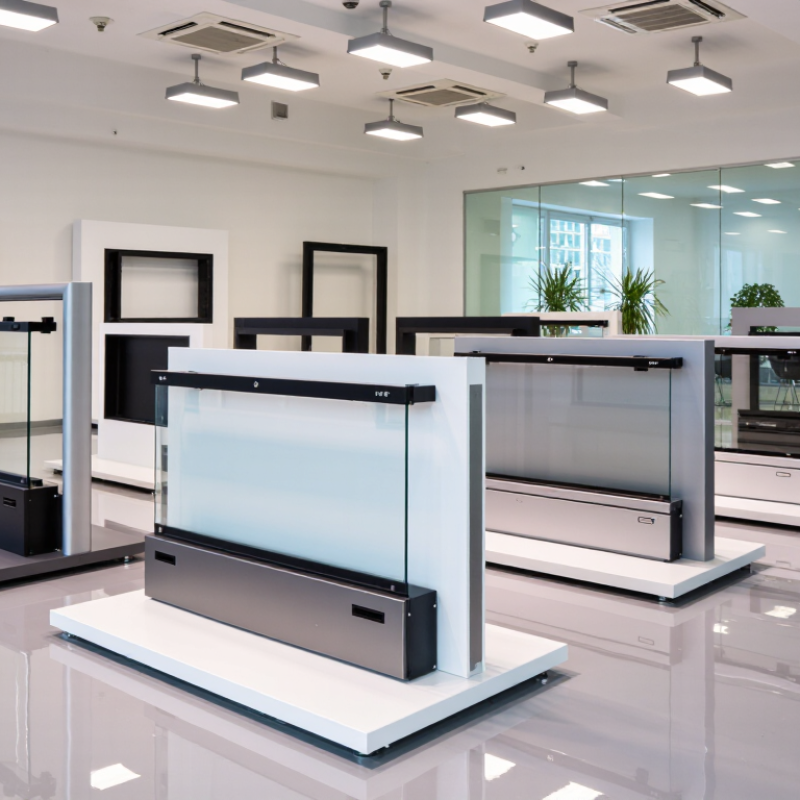
Choosing among China’s TV enclosure cabinet manufacturers takes more than comparing prices. Buyers need to match the enclosure to its actual setting, screen, and daily use. A Tv Enclosure Cabinet may sit beside a bright storefront, in a dusty workshop, or outdoors under changing weather. Each location brings different demands.
Start with the basics. Confirm the display dimensions, mounting pattern, cable routes, and space for service access. Ask what materials and finishes are offered, and how ventilation or temperature control is handled. A neat powder-coated cabinet can look convincing in a catalog. The details matter more. Request drawings, product photographs, and clear information about seals, locks, and maintenance. Not every catalog tells the whole story.
Reliable manufacturers should answer practical questions directly and explain where a standard design may need adjustment. Buyers can also ask about production checks, sample availability, lead times, packaging, and relevant test documentation. Requirements vary by installation, so verify that a product’s stated performance fits your own conditions. A specification sheet is useful, but it cannot replace careful review. That is easy to overlook. Compare suppliers on communication and consistency, not only on a low quotation. Clear drawings and realistic commitments often prevent costly surprises later. Still, no supplier can remove every project risk. A measured review helps buyers choose a suitable cabinet and build a more dependable sourcing relationship.
A TV enclosure cabinet is a protective housing that surrounds a display and its supporting equipment. It can shield the screen from dust, accidental contact, and routine cleaning in busy spaces. Designs range from compact wall-mounted cases to floor-standing cabinets with lockable doors. The right choice depends on the display’s dimensions, cable layout, and how people use the room.
These cabinets are commonly installed in schools, healthcare facilities, gyms, transport areas, and commercial kitchens. In a school corridor, for example, a secure enclosure can help protect a screen from passing backpacks and curious hands. In a kitchen, a sealed front may reduce exposure to splashes and grease. Protection is never absolute. Buyers should check the enclosure’s stated environmental rating and installation guidance for the actual conditions.
Heat management deserves close attention. Screens and media devices produce warmth, and a tightly enclosed cabinet can trap it. Vent openings, internal clearance, and equipment placement all affect airflow. Measure the screen, connectors, and cables before ordering; a cabinet that fits the panel may still pinch a cable behind it. I have seen this detail overlooked. It is an easy mistake, but awkward to fix after mounting. Consider access for servicing, too, especially when the display is installed high on a wall.
IEC 60529 solid-particle protection levels are one factor buyers can consider when choosing an enclosure for a TV installation.
The chart shows the first digit of the IP code: level 1 protects against solid objects 50 mm and larger, level 2 against 12.5 mm and larger, level 3 against 2.5 mm and larger, and level 4 against 1 mm and larger. IP5X is dust-protected; IP6X is dust-tight. These are standardized protection levels, not measurements of overall cabinet quality. TV enclosure cabinets are used in settings such as outdoor spaces, public areas, and industrial sites; choose an enclosure rating suited to the installation, and assess water protection separately using the second IP digit.
China’s TV enclosure manufacturing industry is organized as a network, not a single production line. A buyer may work with an enclosure maker that coordinates several specialist workshops. One cuts and bends sheet metal; another handles surface finishing or component assembly. Some factories manage most steps in-house. Others depend on nearby suppliers.
The work begins with drawings, material choices, and mounting requirements. On the shop floor, laser-cut panels become folded cabinets, with ventilation slots and cable openings placed to match the design. Then come welding, grinding, coating, and fit checks. Small details matter. A rough edge can complicate installation, while an inaccurately placed mounting hole may delay assembly. Inspection methods vary, so buyers should ask how dimensions, coating thickness, and packaging are checked.
The industry includes export-focused factories, regional fabricators, and engineering-led suppliers. Their capabilities can look similar on a catalog page. They may differ in tooling control, sample turnaround, and how clearly they report production changes. Ask for drawings, a physical sample, and records from a comparable order. These checks take time. They are not foolproof, either; a sample may be better finished than routine production. Clear specifications and agreed inspection points help reduce that gap.
When comparing Chinese TV enclosure cabinet manufacturers, assess the process behind the quote, not only the unit price. Ask for drawings with dimensions, sheet thickness, mounting points, ventilation openings, and cable routes clearly marked. Check whether the supplier can explain material grades, coating options, weld details, and tolerance limits in plain terms. Clear answers matter. Request a production sample or first-article inspection before approving a full run. Inspect door alignment, edge finishing, hinge movement, and stability under the intended load. Ask how approved changes are recorded; small drawing revisions can create costly mismatches.
Tips: Send the same specification to each candidate. Compare written lead times, packaging protection, inspection records, and the exact items included in the price. Keep photos and measurements.
Do not rely on attractive product images alone. Request recent workshop and inspection evidence, then check that it matches the proposed process. Discuss carton dimensions, corner protection, moisture barriers, and pallet loading if the cabinets travel far. Ask for a clear defect-handling process and checkpoints for material receipt, welding, coating, and final assembly. Communication deserves a test, too: send one technical question and see whether the answer addresses it directly. A low quote may reflect a different specification, not a better factory. Even careful checks have limits, so record acceptance criteria before ordering.
China Top TV Enclosure Cabinet Manufacturers for Buyers
How Buyers Can Verify Quality, Compliance, and Customization
Compare suppliers using evidence, not polished product photos. Ask for material grades, coating specifications, weld inspection records, and written load-test results. ISO’s 2022 Survey reported more than 1.2 million ISO 9001 certificates worldwide. That figure shows how widely quality systems are used, but a certificate alone does not prove a cabinet meets your requirements. Check its scope, issuing body, and validity. Request a sample inspection report tied to the actual model.
For compliance, confirm the cabinet’s intended environment and destination market before ordering. If dust or water protection matters, ask for an independent test report against the relevant IEC 60529 IP rating. Match the tested model, door seals, cable openings, and ventilation layout to your order. A neat sample can still hide a weak hinge. For customization, review dimensioned drawings, metal thickness, mounting points, finish, and tolerance limits. Approve a physical sample or first-article inspection before full production.
Tips: Send a marked-up drawing. Ask the supplier to record every approved change, then verify one finished unit against it. Small details matter. A cable hole shifted by a few millimeters can complicate installation.
| Verification Area | What to Request | How Buyers Can Verify | Acceptance Guidance |
|---|---|---|---|
| Factory and quality-management capability | Current quality-management certificate, documented inspection procedures, production-process overview, and sample inspection records. | Check that the certificate is current, covers the relevant manufacturing site and scope, and can be verified with its issuing certification body. Ask to see how incoming, in-process, and final inspections are recorded. | A management-system certificate, such as ISO 9001, indicates a quality-management system; it does not by itself certify a particular cabinet or guarantee product quality. |
| Material identity and traceability | Material specifications, supplier records, material certificates where applicable, and batch or lot identification for sheet metal, plastics, glass, and coatings. | Compare material grades and thicknesses on purchasing or inspection records with the approved drawings and purchase specification. Request traceability from a sample finished unit back to its material lot. | Specify material type, grade, nominal thickness, and any required finish in the contract or approved drawing. Do not rely on a general description such as “steel cabinet.” |
| Dimensions and fit | Dimensioned drawings, tolerance requirements, inspection reports, and a first-article sample for the agreed configuration. | Measure critical dimensions on a sample using suitable calibrated tools. Check mounting points, cable openings, ventilation clearances, door gaps, and fit with the intended display and accessories. | Agree which dimensions are critical and define their tolerances on the drawing. Tolerances should be appropriate to the design and manufacturing process rather than assumed to be universal. |
| Structural strength and load capacity | Rated-load specification, mounting details, structural calculations or test records where appropriate, and the proposed test method. | Confirm the test uses the actual mounting configuration and a load representative of the intended display and accessories. Review the sample for deformation, loose fasteners, or damage after testing. | Define the required load, mounting orientation, duration, and allowable deformation before production. A load rating is meaningful only when its test conditions are stated. |
| Surface finish and corrosion resistance | Coating or plating specification, color and gloss references, coating-thickness records where applicable, and finish-test results if specified. | Inspect samples under consistent lighting for color variation, uneven coverage, scratches, sharp edges, and coating defects. Confirm any corrosion test method and exposure conditions in the report. | Set appearance limits and any required corrosion-test conditions in the purchase specification. Salt-spray exposure time or a particular coating thickness should not be treated as universal without an agreed requirement. |
| Electrical safety and grounding provisions | Design drawings for bonding or grounding points, electrical test records for the finished equipment where applicable, and details of insulating parts and cable routing. | Check that grounding provisions match the product design and intended installation. Request evidence for the complete electrical product when the cabinet is part of an electrically powered assembly. | IEC 62368-1 may apply to audio/video and information technology equipment, depending on the product and market. A cabinet alone should not be represented as compliant with a finished-product safety standard without relevant evidence. |
| Ingress protection and environmental suitability | Declared IP rating, test report for the relevant assembled configuration, gasket and sealing details, and installation instructions. | Check that the report identifies the tested enclosure configuration, openings, doors, cable entries, and test method. Compare those details with the product being ordered. | IP ratings are defined under IEC 60529. A rating applies to the tested configuration and should not be assumed if openings, seals, or assembly details change. |
| Restricted substances and market compliance | Material declarations, supplier declarations, and applicable test reports for the intended destination market and product category. | Review whether documents identify the relevant materials, product scope, test methods, and report dates. Confirm that the evidence matches the ordered configuration rather than a different product. | RoHS restrictions and REACH obligations depend on the product, substances, and market requirements. Request applicable documentation; do not treat a generic declaration as proof of every regulatory obligation. |
| Customization and engineering control | Approved drawings, revision history, bill of materials, color or finish references, samples, and a written change-control process. | Compare the quotation, approved drawing, and pre-production sample. Confirm that all custom openings, brackets, ventilation features, logos or labels, and packaging requirements are documented. | Approve one controlled drawing revision before production. Require written approval for changes to materials, dimensions, tooling, finishes, or components. |
| Ventilation and thermal design | Ventilation layout, fan or filter specifications if used, thermal assumptions, and test data for the intended display and operating conditions. | Check that air inlets and outlets are not obstructed by the installation. Where thermal performance is important, test the assembled unit with representative equipment and operating conditions. | Define the expected ambient temperature, equipment heat output, orientation, and allowable internal temperature. Ventilation performance depends on the complete installation, not the cabinet alone. |
| Production consistency and final inspection | Inspection plan, sampling method, defect classification, final inspection report, and records for packaging and labeling. | Agree inspection criteria before production. Inspect a pre-production sample and use an agreed sampling plan for production lots; record any nonconformities and corrective actions. | Specify measurable checks for appearance, dimensions, function, accessories, and packaging. Define the sampling plan and corrective-action process in the purchase agreement. |
| Packaging and transport protection | Packaging specification, packing photos, carton dimensions and weights, and any transit-test records required for the shipping route. | Review whether corners, coated surfaces, doors, glass, and protruding hardware are protected. Conduct a packaging or transit assessment where the shipment conditions justify it. | Agree packaging requirements against the shipping method and handling risks. Record the packed configuration and labeling requirements in the order documents. |

When sourcing TV enclosure cabinets, compare manufacturers against a shared specification, not product photos alone. Record screen dimensions, VESA pattern, cabinet depth, ventilation openings, cable access, finish, and mounting method. Ask for a physical sample and a drawing with tolerances. A few millimeters matter when a display must sit flush. Request separate prices for tooling, sample production, minimum order quantities, and packaging. That makes quotes easier to compare.
Grand View Research estimated the global furniture market at USD 736.6 billion in 2023, with projected growth of 5.4% annually from 2024 to 2030. This broad market figure is not a forecast for TV enclosures, but it signals a large, active supply landscape. For reliable pricing, ask suppliers to itemize materials, labor, surface treatment, packaging, and freight assumptions. Confirm the currency, quote validity, and delivery terms in writing. The cheapest unit price may hide costly custom tooling.
Plan delivery around production and transit separately. UNCTAD’s Review of Maritime Transport 2024 reports maritime trade volume grew 2.4% in 2023 and projected 2% growth for 2024. Shipping conditions can still shift. Build a buffer, confirm carton dimensions and pallet quantities, and schedule a pre-shipment inspection. Check corner protection and scratch resistance on a packed sample. A tidy spreadsheet can still be wrong; verify the dates with the factory before booking freight.