
Decorative Veneer Plywood combines a stable plywood core with a carefully selected natural-wood face. It brings oak, walnut, ash, or teak character to walls, doors, furniture, and built-in storage. Unlike solid timber, it uses thin veneer layers over engineered plies. This structure can reduce movement across changing indoor humidity.
Dr. Robert H. Falk, a former wood scientist at the USDA Forest Products Laboratory, offered a useful principle: “Wood products perform best when their properties match the conditions of use.” That idea matters here. A beautiful walnut panel may still fail in a damp room without suitable adhesive, balancing, and edge protection. Appearance alone is not performance.
The manufacturing details deserve attention. Rotary-cut veneer creates broad, repeating patterns. Sliced veneer produces more refined grain, often with book-matched or slip-matched faces. The plywood grade, core construction, veneer thickness, and finish all influence the final result. Touch the surface. Look at the edges. Check for open joints, bubbling, uneven color, and visible repairs.
Decorative Veneer Plywood is not automatically waterproof. Some products suit dry interiors only. Others use moisture-resistant cores and certified adhesives for demanding environments. Specifications should guide the decision, not showroom lighting.
This article explains what Decorative Veneer Plywood is, how manufacturers make it, and where it performs best. It also considers installation, maintenance, sustainability, and common selection mistakes. The material is elegant, but not effortless. Even experienced designers occasionally overlook the reverse face, which can lead to unbalanced panels or preventable warping.
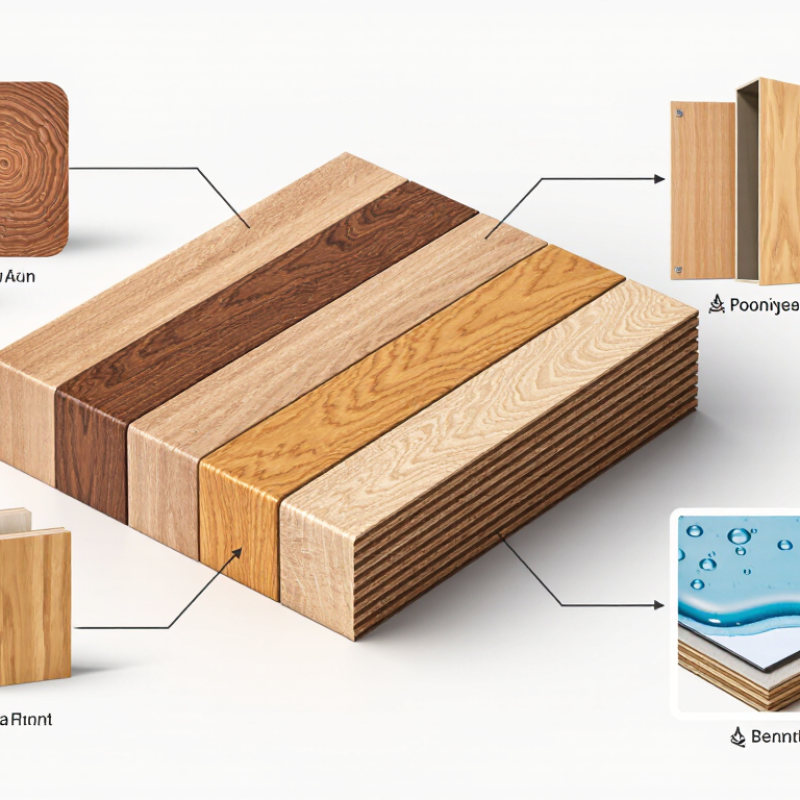
Decorative veneer plywood is an engineered panel with a thin layer of real wood attached to a plywood core. The surface may show oak, walnut, maple, or another carefully selected species. Unlike printed laminate, natural veneer contains genuine grain, pores, and small color changes. These details make each panel slightly different.
The inner plies are cross-laminated, which improves strength and reduces movement. This structure helps the sheet stay flatter than many solid wood boards. A smooth face can be used for cabinet doors, wall panels, shelving, desks, and furniture components. In a workshop, the grain direction matters. Matching adjacent panels can create a calm, continuous appearance.
Decorative veneer plywood is not flawless. Tiny knots, mineral streaks, or shade differences may remain visible. That is often part of its character, but it can challenge strict color matching. A practical inspection includes checking the face for open joints, lifting veneer, and uneven sanding. The edges usually need banding or a compatible finish because the layered core remains exposed. Moisture also deserves attention. Standard interior plywood should not be treated as waterproof material. Careful cutting, balanced finishing, and proper support usually produce better results. I find that choosing the sheet before designing the project prevents disappointment. Sometimes the “perfect” panel is simply the wrong expectation.
Decorative veneer plywood begins with a thin layer of real wood selected for color, grain, and surface character. Manufacturers usually peel or slice veneer from carefully prepared logs. Slicing creates different grain patterns. Some look straight, while others show dramatic cathedral shapes.
The veneer sheets are dried under controlled conditions. Excess heat can cause cracks, curling, or uneven color. Workers then grade each sheet and arrange matching pieces for a balanced appearance. Small defects may be trimmed, patched, or accepted as natural character. This stage requires judgment, not only machinery. A tiny color mismatch can become obvious after finishing.
The selected veneer is bonded to a stable plywood core with adhesive. Thin wood layers are placed in alternating grain directions, improving strength and reducing movement. Pressure and heat press the assembly into a firm panel. After pressing, the panel is cooled, trimmed, sanded, and inspected for bubbles or open joints. It may receive a clear coating, stain, or another protective finish.
The process is not perfectly uniform. Wood responds to moisture.
That matters.
A panel can look flawless in the factory but change slightly in a dry room. Careful manufacturers check moisture content, bonding quality, thickness, and surface consistency before shipment. Installers should also let the plywood adjust to the room before cutting it. This simple step is sometimes overlooked, yet it can prevent visible gaps and unwanted warping.
| Category | Dimension or Feature | Typical Facts and Manufacturing Information | Common Uses |
|---|---|---|---|
| Basic Definition | Decorative veneer plywood | A plywood panel with one or more thin natural-wood veneer faces applied to a structural plywood core. The visible veneer provides the appearance of solid wood while the cross-laminated core provides dimensional stability. | Furniture, cabinetry, wall panels, doors, shelving, and interior trim |
| Panel Structure | Face veneer, core, and back veneer | The face veneer is selected for appearance, the core is made from bonded wood plies, and a back veneer may be used to balance the panel and reduce the risk of warping. | Visible architectural and furniture surfaces |
| Veneer Source | Rotary-cut, sliced, or peeled wood | Logs are processed into thin sheets by rotating the log against a knife, slicing through the log, or peeling the log continuously. Cutting method affects grain pattern and appearance. | Flat-sawn looks, straight grain, cathedral grain, and decorative figured patterns |
| Veneer Thickness | Thin decorative face layer | Decorative veneers are commonly about 0.5–1.5 mm thick, although actual thickness varies by product, wood species, and manufacturing method. The surface should be sanded carefully to avoid cutting through the veneer. | Natural wood appearance with lower material consumption than solid wood |
| Core Construction | Cross-laminated wood plies | Adjacent plywood plies are generally arranged with their grain directions at right angles. This construction improves strength, panel stability, and resistance to movement compared with a single solid-wood board. | Cabinet components, furniture panels, and stable interior surfaces |
| Bonding Process | Adhesive application and pressing | Wood plies and decorative veneers are coated with adhesive, stacked in the required grain sequence, and pressed under controlled heat and pressure. The adhesive type determines suitability for dry, humid, or exterior conditions. | Bonded panels for interior or specially rated applications |
| Surface Preparation | Sanding and grading | After pressing, panels are trimmed, calibrated, sanded, and visually graded. Surface grades may consider color, grain consistency, knots, mineral streaks, patches, and other natural characteristics. | Clear finishes, stains, paint systems, and factory-laminated surfaces |
| Common Thicknesses | Panel thickness | Common plywood thicknesses include approximately 6, 9, 12, 15, 18, and 25 mm. Available sizes and thicknesses vary according to the construction standard and intended application. | Thin panels for cabinet backs and thicker panels for shelves, doors, and furniture parts |
| Standard Panel Size | Sheet dimensions | Common sheet formats include approximately 1,220 × 2,440 mm and 1,220 × 2,500 mm, with other sizes available. Exact dimensions depend on the regional plywood standard and production line. | Efficient cutting for furniture, cabinetry, and wall-panel layouts |
| Appearance Options | Species, grain, and matching | Appearance depends on the wood species and how the veneers are joined. Common matching methods include book matching, slip matching, and random matching, each producing a different visual effect. | Feature walls, cabinet doors, tabletops, partitions, and decorative joinery |
| Strength and Stability | Structural behavior | The plywood core distributes loads across multiple layers and generally resists splitting and dimensional change better than solid wood of the same width. Performance still depends on ply quality, thickness, span, and moisture exposure. | Shelves, work surfaces, furniture frames, and built-in storage |
| Moisture Performance | Interior and higher-moisture use | Decorative veneer plywood is not automatically waterproof. Moisture resistance depends on the core, adhesive, edge sealing, veneer finish, and product rating. Unsealed edges are especially vulnerable to water absorption. | Interior rooms when properly finished; specially rated panels for humid environments |
| Finishing | Protective surface coating | Clear lacquer, varnish, oil, wax, or water-based finish can protect the veneer and change its color or sheen. A compatible finish should be applied evenly to the face, back, and exposed edges. | Furniture, counters, wall cladding, doors, and display fixtures |
| Edge Treatment | Exposed plywood edges | Edges may be left visible, sanded smooth, covered with matching veneer edge banding, or concealed with solid-wood edging. Sealing exposed edges helps limit moisture entry and surface damage. | Shelves, cabinet sides, tabletops, and modern exposed-edge designs |
| Main Advantages | Functional and visual benefits | It combines the natural appearance of real wood with the stability and efficient material use of plywood. It can also provide more consistent wide panels than solid timber boards. | Large furniture surfaces and coordinated interior woodwork |
| Limitations | Handling and design considerations | The thin face veneer can be damaged by impact or excessive sanding, grain and color may vary naturally, and poor storage or moisture exposure can cause warping or delamination. | Requires careful cutting, storage, finishing, and installation |
| Recommended Storage | Flat, dry, and supported storage | Panels should be stored flat on level supports, protected from direct rain and sunlight, and kept away from sudden changes in temperature and humidity. Uneven support can contribute to bending. | Maintaining panel flatness before fabrication and installation |
| Typical Applications | Interior construction and furniture | The material is widely used for cabinet doors, carcasses, furniture parts, wall and ceiling panels, partitions, shelving, interior doors, and decorative built-ins. | Residential, commercial, hospitality, office, and retail interiors |
Decorative veneer plywood combines a stable plywood core with a thin natural wood face. Common types are rotary-cut, plain-sliced, quarter-sliced, and rift-sliced veneer. Rotary-cut veneer creates broad, repeating grain patterns. Plain-sliced veneer resembles sawn timber, with cathedral shapes across cabinet doors. Quarter-sliced veneer produces straighter lines and stronger visual symmetry. Rift-sliced veneer looks especially linear and restrained.
Species also change the panel’s character. Oak offers visible pores and firm contrast. Birch gives a pale, even surface. Walnut creates deeper brown tones and a more formal appearance. Reconstituted veneer uses aligned wood fibers to provide consistent color and grain. It can reduce natural variation, although some designers may find it too uniform. Flexible veneer plywood uses thinner construction for curved panels, such as rounded counters or display walls.
The USDA Forest Products Laboratory’s Wood Handbook explains how veneer direction, thickness, and adhesive bonding affect panel performance. FAO’s 2023 Forestry Production and Trade data places Asia at roughly four-fifths of global plywood production, showing the scale of this material category. Decorative panels still require careful checking. Look for balanced face and back veneers, stable cores, low formaldehyde emissions, and a suitable moisture rating. A beautiful surface can hide weak bonding. I have also seen grain matching fail when installers rush the layout. Viewing full sheets under final lighting remains essential.
What Is Decorative Veneer Plywood and How Is It Used?
Decorative veneer plywood combines a stable plywood core with a thin real-wood surface. The veneer supplies visible grain, while layered plies improve strength and dimensional stability. It suits furniture and interior design because it looks refined without using solid wood throughout. FAO’s Global Forest Resources Assessment 2020 reports that forests cover about 31% of global land. Material efficiency therefore deserves attention, although plywood is not automatically sustainable.
In furniture, designers use it for cabinet doors, drawer fronts, shelving, desks, and dining tables. A walnut-look face can warm a compact apartment kitchen. Pale ash veneer can make a narrow office feel brighter. In interior projects, larger sheets serve wall panels, doors, ceiling details, and built-in storage. FAO Forestry Production and Trade data places global plywood production at roughly 170 million cubic metres in 2022, showing its substantial role in modern construction and manufacturing.
Specification matters. Check veneer matching, core quality, thickness, moisture resistance, and formaldehyde emissions before ordering. Edge banding protects exposed layers and improves the finished appearance. Clear finishes reveal grain, while pigmented coatings create a more uniform surface. In workshop practice, thin decorative faces can chip during cutting, especially with blunt blades. It is not flawless. Careful machining and concealed fixing are still necessary. UNECE and FAO market reviews also show that wood-panel demand can shift with construction cycles, so designers should avoid treating availability as permanent.
Decorative veneer plywood is commonly selected by balancing appearance, rigidity, weight, and installation method. Around 18 mm is widely used for furniture carcasses, doors, and shelving, while thinner 9–12 mm panels are often suitable for wall and ceiling finishes when they are properly supported.
Decorative veneer plywood combines a stable plywood core with a thin layer of natural wood. Its appearance depends on more than color. When choosing it, examine the veneer species, grain direction, thickness, and matching quality. A calm, continuous pattern usually suits cabinet doors, while dramatic grain can become distracting across large wall panels. Lighting changes everything.
Check the sheet under the lighting used in the finished room. Natural veneer can vary between sheets, even when they come from the same production batch. Ask for several samples, not just one attractive panel. Inspect the edges for gaps, uneven layers, or weak bonding. The core should feel firm and show consistent plies. A beautiful face cannot hide a poor structure.
Moisture exposure also matters. Interior furniture needs different protection from bathroom storage or entryway panels. Confirm the panel’s thickness tolerance, flatness, sanding quality, and suitable surface finish.
For cutting and routing, choose a grade that reduces splintering. Request reliable technical documents covering emissions, adhesive performance, and moisture resistance. These details support safer, more predictable work.
I would not rely only on photographs. Veneer color can look warmer on a screen than in person. A sample may also conceal small repairs or joint lines. In practical workshop checks, I prefer viewing the panel from several angles before approving it. That extra inspection takes minutes, but replacing a mismatched door can waste material, labor, and patience.
