
In 2026, choosing a Chandelier Led Lamp is about more than replacing a bulb. The right light can make cut-glass prisms sparkle, soften a dining table, or expose every fingerprint on polished brass. The International Energy Agency’s Energy Efficiency 2023 report identifies lighting as a significant part of global electricity use, while the U.S. Department of Energy says LEDs use at least 75% less energy than incandescent lamps. These figures explain the appeal, but they do not tell the whole story.
Details matter. A candle-shaped LED suits a traditional arm chandelier; globe and tubular lamps bring a different look to open fixtures. Compact, dimmable, and color-tunable options can help in smaller spaces or rooms used throughout the day. Yet brightness, color temperature, bulb dimensions, and dimmer compatibility still need checking. A beautiful lamp that flickers is not a good choice.
Lighting researcher Dr. Mariana Figueiro’s work on light and human health underscores why timing, intensity, and color deserve attention alongside appearance. That is a useful design lens, not a one-size-fits-all prescription. This guide compares the leading chandelier LED lamp types expected to matter in 2026, including where each works well and where it may disappoint. Some product claims sound more certain than the evidence allows. Keep that in mind.
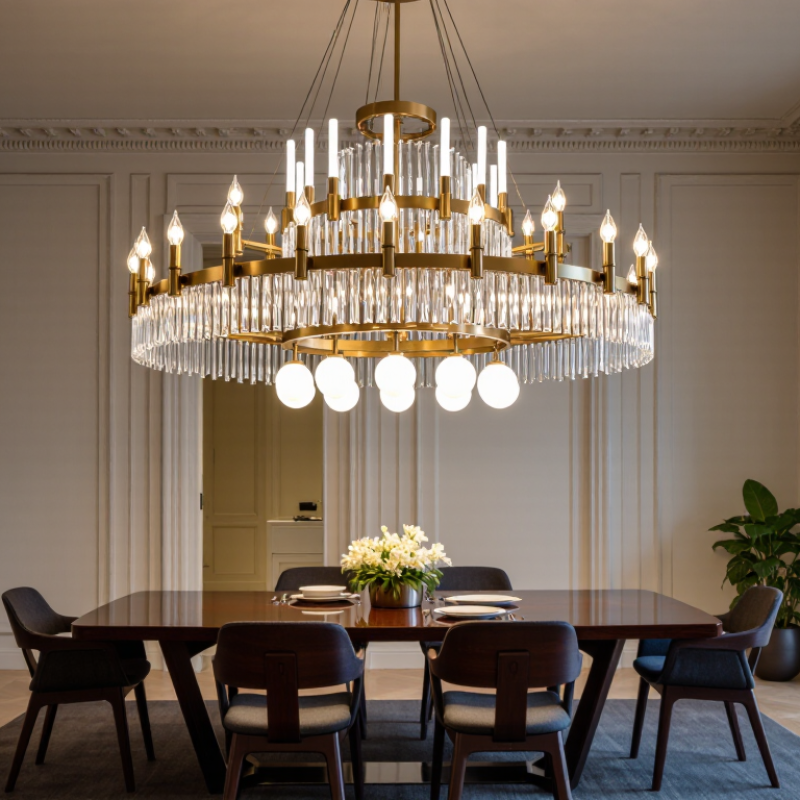
A chandelier LED lamp is either an LED bulb fitted into a chandelier socket or an integrated LED light source built into the fixture. In both designs, electricity powers a semiconductor that emits light. A driver regulates the current, while heat sinks help move warmth away from sensitive components. The U.S. Department of Energy reports that LEDs use at least 75% less energy and can last up to 25 times longer than incandescent lighting. That can mean fewer bulb changes above a tall dining table.
Light quality still matters. Warm white light, around 2700–3000 kelvin, often gives crystal drops and brass arms a softer appearance. Cooler light can make pale walls feel sharper, sometimes too stark. Check the fixture’s dimmer compatibility before installation; an incompatible dimmer may cause flicker or uneven brightness. I have found that a lamp’s appearance in a showroom can differ from its glow in a room with dark walls.
Tips: Match the bulb base and maximum wattage to the fixture label. Choose dimmable LEDs only when the control supports them. Test one bulb first, if possible.
Chandelier LED lamps are commonly classified by shape, socket, and lighting performance. Candle-shaped bulbs suit narrow arms and sleeves, while small globes create a rounder look beneath open shades. Tubular lamps fit some compact or exposed holders. The bulb’s base must match the fixture socket; appearance alone is not enough. Check the fixture label before buying.
Another useful distinction is replaceable bulbs versus integrated LED modules. With replaceable bulbs, you can change the lamp without replacing the chandelier. Integrated modules often allow slimmer designs, but repairs may require professional service. These categories can overlap. That can be confusing.
Light quality also matters. Color temperature describes whether light appears warm or cool, while color rendering indicates how naturally fabrics and finishes look. A warm tone can soften a dining room; a cooler one may feel stark against cream walls. Dimmable LEDs need compatible controls, and not every bulb works well with every dimmer. Check stated compatibility and brightness in lumens. A clear checklist helps. Still, packaging can be unclear, so confirm the socket, dimensions, and dimming details before purchase.
In 2026, the chandelier LED types that stand out are candle-shaped, filament-style, dimmable, and color-tunable lamps. Candle-shaped LEDs suit traditional arms, with slim bodies and flame-tip finishes that look natural beneath a shade. Clear filament-style LEDs work well in open fixtures, where visible light elements become part of the design. The U.S. Department of Energy’s Energy Saver guidance says LEDs use up to 90% less energy than incandescent bulbs. It also reports that LEDs can last up to 25 times longer. These figures describe LEDs broadly, not chandelier-specific models.
Dimmable candle lamps are a practical choice for dining areas, where softer light can make a room feel less stark. Check that the bulb and dimmer are compatible; otherwise, flicker or a narrow dimming range may spoil the effect. Small detail. Color-tunable LEDs offer more flexibility, shifting from warm evening light to cooler task lighting, but not every fixture needs that feature. For a dependable choice, compare the lamp’s base, dimensions, brightness, color temperature, and enclosed-fixture rating with the chandelier’s specifications. A sleek bulb can still look awkward if its tip sticks past the shade. DOE data makes LED efficiency clear; choosing the right shape and light quality takes a closer look.
Typical lumen-output ranges by lamp style. These are approximate product ranges, not a market ranking; actual output varies by bulb.
Candle bulbs suit traditional chandelier sockets, while globe and tubular bulbs offer distinct looks. Standard and smart bulbs generally provide broader brightness options; check fixture size, base type, dimmer compatibility, and the bulb’s stated lumens before choosing.
What Are the Top Chandelier LED Lamp Types in 2026?
Candle-shaped LED lamps suit traditional chandeliers, with slim profiles that fit narrow arms and decorative sockets. Their pointed tips preserve the familiar candle look, though some models cast uneven light upward. Globe LEDs create a softer, more visible feature in open fixtures. A-shaped retrofit LEDs are practical replacements, but their broader bodies can look crowded in compact shades. Integrated LED chandeliers offer thin, sculptural forms and fewer exposed bulbs; however, replacing a failed light source may be less straightforward.
Performance depends on more than lamp shape. Compare lumens for brightness, color temperature for warmth, and CRI for how accurately fabrics and food appear. The U.S. Department of Energy’s “LED Lighting” resource reports that LEDs use at least 75% less energy and can last up to 25 times longer than incandescent lighting. Those figures describe LEDs broadly, not every chandelier bulb or fixture. Dimming quality and heat management still vary.
Tips: Check the fixture’s socket size and maximum wattage before buying. For a dining table, try warm-white lamps around 2700K and confirm dimmer compatibility. A beautiful bulb can still disappoint. Test one lamp first; room colors and shades change the result.
| Lamp Type | Typical Design | Common Base and Fit | Typical Light Output | Performance and Best Use | Key Considerations |
|---|---|---|---|---|---|
| Candle or torpedo LED | Narrow, flame-shaped or pointed bulb that echoes the traditional chandelier candle. | Often E12 in North America or E14 in many other markets; check the fixture label and socket. | Commonly about 250–800 lumens per bulb, depending on size and power. | A versatile choice for multi-arm chandeliers. Clear versions give a crisp, decorative look; frosted versions soften the light. | Confirm bulb length and width, especially where shades or glass sleeves are fitted. Dimming depends on the bulb and dimmer. |
| LED filament candle | Clear glass with visible LED filaments, often in a candle or torpedo shape. | Commonly E12 or E14, depending on the fixture and market. | Often around 250–600 lumens per bulb. | Creates a traditional, decorative appearance and works well in open chandeliers where the bulb is visible. | Clear glass can cause more direct glare than an opaque or frosted bulb. Check the stated color temperature and dimmer compatibility. |
| Globe LED | Round bulb with a larger, spherical envelope; available in clear, frosted, and opal finishes. | Base varies by fixture, commonly E12, E14, or a larger screw base in some designs. | Typically about 400–1,000 lumens per bulb. | The larger luminous surface can provide a broad, even appearance. Suits chandeliers designed for exposed round bulbs. | Check globe diameter and fixture clearance; a globe may not fit behind narrow shades or decorative sleeves. |
| Tubular LED | Long, slim tube-shaped bulb, sometimes with a clear envelope for a vintage-inspired look. | Base and dimensions vary; verify the fixture socket and the available space. | Often about 300–800 lumens per bulb. | Useful for chandeliers with elongated candle sleeves or narrow decorative openings. Light distribution depends on the bulb’s construction. | Measure the bulb length as well as its diameter. Some models may project farther from the socket than a standard candle bulb. |
| Smart LED chandelier bulb | Usually a candle, globe, or standard bulb shape with app-based controls. | Available in several bases; match the base and size to the fixture. | Output varies by model; many household smart bulbs are in the range of roughly 400–800 lumens. | May offer app control, scheduling, dimming, or adjustable white light; some models also provide color control. | Requires compatible controls and, for many models, a suitable hub or wireless network. Wall-dimmer compatibility varies and should be checked. |
| Integrated LED chandelier | LED modules are built into the fixture rather than supplied as separate replaceable bulbs. | No standard replaceable bulb base; the fixture’s LED module and driver are part of its design. | Specified for the whole fixture, often from several hundred to several thousand lumens depending on size and number of light sources. | Allows compact shapes and integrated light distribution. Performance, color temperature, and dimming features are specified for the complete fixture. | Check whether the LED module or driver is serviceable and review the manufacturer’s rated lifetime and warranty before purchase. |
Values are typical guide ranges, not guarantees; actual output, bulb dimensions, base type, color temperature, and dimming performance vary by product. Always check fixture and lamp specifications for compatibility.
Matching an LED lamp to a chandelier starts with its socket and shape, not appearance alone. Check the fixture label or manual for base type, maximum wattage, and approved lamp dimensions. A candle-style lamp suits narrow arms; a globe may fit wider shades but look crowded beneath small cups. Measure the opening and available height. Small details matter.
Next, consider light output and color. Lumens describe brightness more usefully than watts, so compare lumen ratings with the old lamp’s output. In dining rooms, warm white around 2700–3000 K often preserves a relaxed feel, while cooler light can make crystal sparkle sharply. That effect is not always flattering. Choose dimmable LEDs only when both the lamps and the existing dimmer are compatible; a mismatch may cause flicker or limit dimming.
Finally, inspect the chandelier’s operating conditions. Enclosed shades can trap heat, so choose lamps rated for enclosed fixtures when the manual requires it. Filament-style LEDs offer a familiar candle appearance, while compact bulbs can hide behind decorative sleeves. Check beam direction too: downward-facing lamps may leave ceilings dim, while clear, exposed bulbs can cause glare at eye level. Test before buying. A lamp that looks perfect in a shop may feel harsh at home, where room surfaces and shade materials change the result.
