What Are the Top Types of Marble Floor Tiles?
Marble floor tiles bring natural variation into a room, but no two slabs look exactly alike. The right choice depends on more than color. Veining, finish, tile size, and daily use all affect how a floor looks and performs. Carrara marble usually has a soft gray-white base with fine veining. Calacatta often shows bolder veins against a brighter background. Statuario can offer dramatic contrast, while Crema Marfil brings warmer beige tones. Travertine, sometimes grouped with marble in tile shopping, has a more porous, textured appearance. Names can be confusing. Suppliers may use them differently.
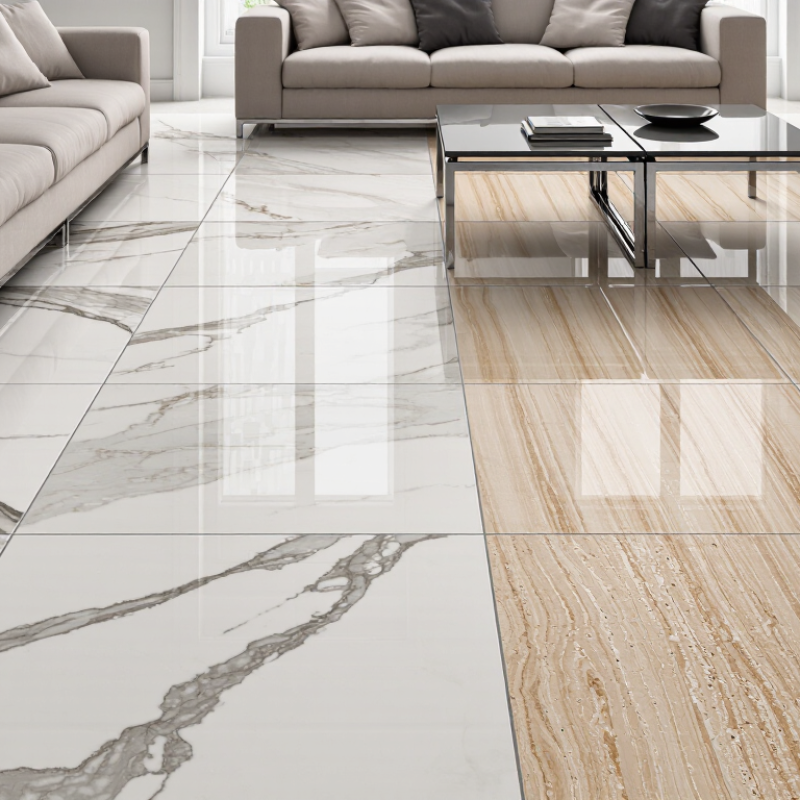
When comparing Floor Tiles Marble options, inspect actual samples in natural light. A polished tile reflects light and can make veins stand out, while a honed finish feels more understated. Surface texture also matters in entryways and bathrooms, where moisture may affect footing. Ask the supplier about sealing, cleaning, thickness, and shade variation before ordering. Check several tiles together, not just one small sample. It helps reveal the pattern across a larger area. Still, a sample cannot show every change in a full installation. That is worth remembering. Marble is a natural stone, so variation is part of its appeal and its occasional frustration. This guide explores popular types, their visual character, and practical points to consider before choosing a floor.
How Marble Floor Tiles Are Classified
What Are the Top Types of Marble Floor Tiles?
How Marble Floor Tiles Are Classified
Marble floor tiles are commonly classified by finish, color, and format. Finish changes both appearance and everyday feel. Polished marble has a glossy surface that reflects light and makes veining stand out. It can feel slick when wet, so consider where water may collect. Honed marble has a soft, matte look. It often suits busy rooms where a mirror-like shine would show every footprint. Tumbled marble has rounded edges and a more textured, aged appearance. Expect variation.
Color groups include white, gray, beige, green, and darker tones, but labels alone tell little. Veins may appear as fine threads or bold bands, even within one batch. View several tiles together, not just a single sample. The labels can be less tidy than catalogs suggest.
Tiles are also sorted by size, thickness, and edge style. Large-format pieces create fewer grout lines, while smaller tiles can follow curved areas more easily. Check measurements and thickness before planning transitions to nearby flooring. Marble is natural stone, so shades and patterns vary; sealing can help reduce staining, but it does not make the surface stain-proof. A small sample may not show the full range.
Calacatta and Statuario: Bold White Marble Varieties
Calacatta and Statuario are bold white marble choices, but their patterns create different moods. Calacatta often has a creamy or bright white background, crossed by broad gray veins and sometimes warm gold accents. Statuario typically pairs a luminous white field with strong, sculptural gray veining. Neither stone has a perfectly repeatable pattern. Every slab differs. That matters when tiles meet across a large floor: vein direction and contrast can shift noticeably from one piece to the next.
Before choosing, inspect several actual tiles in daylight and under your room’s lighting. A small sample can hide the drama—or the variation—of a full installation. Calacatta’s wider veining can make a spacious entry feel striking, while Statuario’s crisp contrast may suit a quieter, tailored interior. Both are natural marble, so they can etch when exposed to acidic spills and may need periodic sealing. Sealing helps resist staining, but it does not make marble stain-proof. A honed finish softens reflections and shows fewer smudges than a polished one, though it is not automatically slip-proof. White marble is beautiful. It also asks for care. Be honest about how much maintenance your household will accept.
Crema Marfil and Emperador: Warm-Toned Marble Options
Crema Marfil brings a soft, creamy beige tone to a room, often marked by fine veins or cloudy patches. Its gentle color can make a narrow hallway feel brighter without the sharp contrast of white stone. Patterns vary from tile to tile. That variation is part of its appeal, though a large floor may look less uniform than expected. View several pieces together before choosing a layout.
Emperador marble offers a deeper, warmer character, with brown shades and lighter veins. Light Emperador tends toward tan, while darker varieties create a richer, more dramatic floor. It pairs naturally with wood, brass, and muted wall colors. In a small room, however, dark tiles can feel heavy, especially under limited natural light. A sample near the actual windows helps reveal the difference.
Both stones contain calcite, so acidic spills such as lemon juice or vinegar can dull the surface. Wipe spills promptly, and ask an experienced stone installer about suitable sealing and cleaning products. A honed finish can soften reflections, while polished marble shows more shine and may reveal scratches more readily. Neither finish is maintenance-free. I would not choose by color alone; check the tile’s veining, finish, and variation in the lighting where it will be installed.
How Color, Veining, and Finish Distinguish Marble Tiles
Marble floor tiles differ as much by pattern as by color. White Carrara-style stone often carries soft gray lines, while darker varieties can show gold, rust, or green movement. Veining may run in fine threads or broad, cloud-like bands. Lay several tiles together before installation; a single sample rarely shows the full pattern. Some variation is the point, though it can make a tightly matched layout difficult. That is worth considering.
Finish changes both appearance and underfoot feel. Polished marble reflects light and sharpens color, but can show water marks and scratches more readily. Honed stone has a quieter, matte surface; brushed finishes feel more textured and visually relaxed. For wet, level interior areas, ANSI A326.3 uses a wet dynamic coefficient of friction of 0.42 as a reference threshold. It is not a guarantee against slipping: footwear, water, cleaning residue, and maintenance all matter. Ask for the tested finish, not just the stone name. Natural Stone Institute care guidance also recommends cleaning marble with products suited to natural stone, since acidic cleaners can etch calcite-rich surfaces. A small test patch helps. Short sample, long commitment.
What Are the Top Types of Marble Floor Tiles? - How Color, Veining, and Finish Distinguish Marble Tiles | Marble Type | Typical Color | Veining and Pattern | Common Tile Finishes | Appearance and Practical Notes |
| Carrara | White to light gray | Usually fine, soft gray veining with a relatively gentle pattern | Polished or honed | A classic, understated look. Natural variation means tiles can differ in tone and veining. |
| Calacatta | White to creamy white | Often has prominent gray or gold-toned veins with broad, dramatic movement | Polished or honed | A high-contrast statement stone. Vein strength and color vary between slabs and batches. |
| Statuario | Bright white to ivory | Distinctive, often bold gray veining against a light background | Polished or honed | Creates a striking, luminous effect; select tiles together when a consistent layout is important. |
| Crema Marfil | Cream, beige, or warm ivory | Generally subtle veining, sometimes with small fossil-like markings | Polished, honed, or brushed | A warm neutral option that can make a space feel softer; beige tones may vary from tile to tile. |
| Emperador | Light to dark brown | Lighter cream or tan veins, often with a mottled or brecciated pattern | Polished or honed | Adds depth and warmth. The name is used for varieties with different brown shades and patterns. |
| Nero Marquina | Black to deep charcoal | Contrasting white veins, ranging from fine lines to irregular bands | Polished or honed | A dramatic dark choice. Dust, light-colored residue, and surface marks can be more noticeable. |
| Finish | How It Looks | Practical Consideration |
| Polished | Glossy and reflective; often makes color and veining appear more pronounced. | Can be slippery when wet and may show etching or scratches more clearly. |
| Honed | Smooth, matte surface with little or no shine. | A softer visual effect; it can still stain or etch and requires appropriate care. |
| Brushed or Tumbled | Textured, aged appearance with a less reflective surface. | Texture can provide more grip, but textured surfaces may need extra attention during cleaning. |
Marble is a natural, calcite-based stone that can be porous and is sensitive to acidic substances. Sealing may help reduce staining, but it does not prevent etching; follow the care guidance for the specific tile and finish.