
A trade show booth can look impressive beneath bright lights, yet still feel wrong for a company’s needs. Rental may suit a one-off event, but repeated fees, limited customization, and rushed setup can make teams reconsider. A Trade Show Booth Rental Alternative might include a modular system, a reusable custom exhibit, or a hybrid approach. The right choice depends on show frequency, storage, staffing, and budget. Small details matter: branded panels, labeled cases, and a layout that keeps product demos visible.
Management expert Peter Drucker offered a useful reminder: “There is nothing so useless as doing efficiently that which should not be done at all.” His words were not about exhibits, but they prompt a fair question: does renting support the goal, or simply repeat a familiar process? A reusable booth can offer more control over materials and messaging. It can also bring new costs, including transport, upkeep, and storage. Not an automatic win. A booth sitting in a warehouse is not a strategy. This guide looks at the practical trade-offs, from first costs to setup demands, so exhibitors can choose an approach that fits real show schedules. Some teams may still prefer rental. That deserves honest consideration, too.
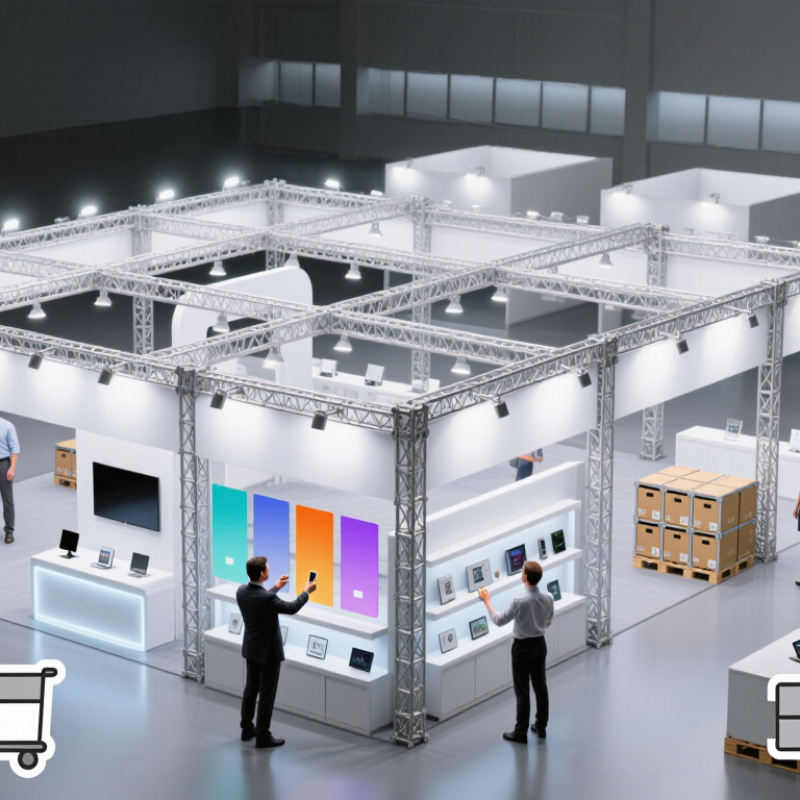
Why Choose an Alternative to Trade Show Booth Rental?
What Trade Show Booth Rental Includes and How It Works
A trade show booth rental usually covers a reusable frame, printed graphics, basic lighting, and selected furniture. Some packages also include shipping, installation, dismantling, and return transport. The exact scope varies, so request an itemized quote before comparing prices. A neat-looking package can still leave gaps.
The process often starts with booth dimensions, venue rules, and a layout discussion. You provide artwork or approve designs, then the supplier prepares the display and schedules delivery. On-site crews assemble the frame, attach graphics, position counters, and check the lighting. Timing matters. A delayed freight delivery can leave little room for corrections.
Before signing, confirm what happens if a graphic arrives damaged or the booth needs adjustment. Ask whether storage, electrical connections, cleaning, and show-site labor are included. These details are easy to overlook when focusing on the floor plan. Rental works well for a one-time event, but repeat exhibitors may want to compare its recurring fees with ownership. I would not assume ownership is automatically cheaper; storage and maintenance take time, too. A written scope makes the trade-offs clearer.
A rental booth can reduce upfront spending and simplify shipping, but convenience often comes with constraints. Standard panels, counters, and lighting may limit how closely the space reflects a company’s visual identity. A 10-by-10-foot booth can feel especially generic when neighboring exhibitors use similar layouts. That matters.
Rental inventory also varies by show and supplier. A preferred counter or display may be unavailable, while late changes can add costs and coordination. Fixed components can make it harder to adapt the booth for product demonstrations, accessible traffic flow, or storage. I’ve seen small layout decisions—like where to place a screen—affect whether visitors stop or keep walking. Still, a rental is not automatically a poor choice; the venue, schedule, and team’s needs matter.
CEIR attendee research has reported that 81% of trade show attendees have buying authority. That figure does not prove rentals perform worse, but it highlights the value of making a clear impression on qualified visitors. Before renting, exhibitors can request exact dimensions, inspect finish samples, and confirm what happens if an item arrives damaged or differs from the order. These checks take time. Yet overlooking them can leave teams troubleshooting a counter or cable placement minutes before doors open.
Alternatives to booth rental range from portable displays to fully custom exhibits. A modular booth kit uses reusable frames, fabric graphics, shelves, and lights; it suits teams attending several events with similar floor plans. A compact pop-up display costs less to ship and can fit in a small car, but offers limited storage and less visual impact. For a larger presence, a company can buy a custom-built booth and hire local crews for setup. That lowers repeated rental costs, though storage, repairs, and freight become ongoing responsibilities.
Other options include sharing exhibit space with a partner, sponsoring a lounge, or creating a hands-on product demo outside a traditional booth. CEIR’s research on the role and value of B2B exhibitions reports that 81% of attendees have buying authority, a useful reminder to design any format around qualified conversations—not just foot traffic. The figure does not guarantee results at every show. A partner space may also blur who owns each lead. That sounds simple. It isn’t. Before choosing, compare total costs across several events, including labor, drayage, storage, and graphic updates. A cheaper display can still be a poor fit if visitors cannot see the product or speak comfortably with staff.
Buying a display can be an alternative to renting. This chart compares example floor footprints calculated from the dimensions shown: a 6 × 6 ft tabletop setup, a 10 × 10 ft portable pop-up, a 10 × 20 ft modular exhibit, and a 20 × 20 ft reusable exhibit. These are illustrative configurations, not industry averages; actual space needs vary by event.
Owning a booth can make sense when your team attends several shows each year and needs a consistent look. A reusable frame can reduce repeated rental costs, while custom counters and shelves keep product demonstrations familiar. But ownership brings storage, maintenance, shipping, and labor expenses. A scuffed panel still needs repair. That part is easy to underestimate.
Rental suits occasional events or changing floor plans. It offers flexibility, though repeated rentals may mean paying for similar structures again and again. A modular approach sits between the two: own the frame, then rent or replace graphics and accessories as needs change. Freeman’s 2023 Attendee Expectations Study reported that 77% of attendees viewed in-person events as the best way to discover new products and services. That supports planning a useful, hands-on display, but it does not prove that buying a booth is always cheaper. Compare total costs across your actual event schedule.
Tips: List every show planned for the next three years. Add storage, freight, setup, repairs, and rental fees. Ask whether the booth fits different spaces, not just one ideal floor plan. Then check your numbers. They may surprise you.
Why Choose an Alternative to Trade Show Booth Rental?
How to Choose the Right Booth Strategy for Your Business
The right booth strategy starts with your event goals, not the price of a rental package. Are you launching a product, collecting qualified leads, or meeting existing customers? CEIR research has reported that 81% of trade show attendees have buying authority. That makes useful conversations more valuable than a large display with little room to talk.
Freeman’s 2023 attendee research found that 77% of attendees consider in-person events an effective way to discover new products and services. Give them a reason to stop. A compact modular booth might suit a team testing a new market, while a reusable exhibit can make sense for a company with a busy annual schedule. Compare shipping, storage, setup labor, and refresh costs—not just the rental fee. A low quote can hide expensive logistics.
Walk the floor plan before deciding. Check sightlines, nearby entrances, power access, and the space needed for a live demonstration. Then ask staff what visitors actually did at past shows. Their feedback may be imperfect, but it can reveal whether the issue was booth design, staffing, or the offer itself. No strategy fits every event. A custom build may look impressive and still be the wrong choice for one short show.
| Booth Strategy | Typical Cost Pattern | Reuse and Customization | Logistics and Storage | Best Fit | Key Trade-Off |
|---|---|---|---|---|---|
| Turnkey booth rental | Event-based rental and service charges; usually avoids a large upfront purchase. | Limited to the rental provider’s available components and customization options. | Provider may coordinate booth components and setup; confirm shipping, labor, and show-service inclusions. | First-time exhibitors, infrequent events, or teams seeking simpler setup. | Recurring rental charges and less control over the exhibit assets. |
| Purchase a custom exhibit | Higher upfront investment; ongoing costs may include storage, maintenance, shipping, and labor. | High control over layout, materials, graphics, and brand presentation; components may be reused. | Requires a plan for packing, transport, storage, repairs, and installation. | Businesses with a stable exhibit program and consistent booth requirements. | Ownership can be less practical when event frequency or booth specifications change. |
| Modular exhibit system | Purchase or rental costs depend on configuration; reusable parts can serve multiple layouts. | Adaptable components allow changes to booth size, layout, and graphics. | Components must be inventoried, packed, transported, and stored between events. | Companies attending several events with varying exhibit footprints. | Reconfiguration may require skilled labor and careful component planning. |
| Portable display | Generally a smaller-scale purchase than a large custom exhibit; transport and replacement graphics remain cost factors. | Reusable and easy to update, but offers fewer layout options and less built-in space. | Designed for compact packing and simpler transport; check case dimensions and handling needs. | Small booths, local events, tabletop presentations, or teams traveling light. | May not provide the presence, storage, or meeting space needed for larger exhibits. |
| Hybrid ownership and rental | Combines owned core assets with rental components; costs vary by event and configuration. | Keeps frequently used elements consistent while allowing selected parts to change. | Requires coordination between owned inventory, rental availability, and event schedules. | Businesses with a regular event calendar but changing booth sizes or locations. | Clear inventory tracking and advance planning are essential to avoid duplicate costs. |
