Best Off Grid Prefab Homes in China for Sale
Choosing the Best Off Grid Prefab Homes in China for Sale takes more than comparing attractive renderings and headline prices. Off Grid Prefab Homes can range from compact cabins to larger modular residences, with very different levels of insulation, energy storage, and equipment. A well-planned unit may include rooftop solar panels, a battery bank, an inverter, efficient windows, and space for water storage. These features matter most when they match the climate and the number of people who will use the home.
This guide introduces practical points to check before contacting a supplier. Review floor plans, structural details, insulation specifications, electrical layouts, and installation requirements. Ask what the quoted price includes, such as interior finishes, appliances, packaging, and transport. Request clear product documents and recent project photos, then confirm the details directly with the manufacturer. Looks can mislead.
Consider how the home will reach its site and connect with local services. Shipping, foundations, weather exposure, and access for installation can change the real cost. Off-grid systems also need realistic estimates for daily energy use, sunlight, backup power, and water needs. A listed solar capacity alone does not tell the whole story. Some information may remain unclear until a supplier answers specific questions; that is a reason to pause, not guess. The best choice is not always the largest or cheapest model. It is the one whose documented specifications, support, and operating needs fit your site and budget.
What Off-Grid Prefab Homes in China Are
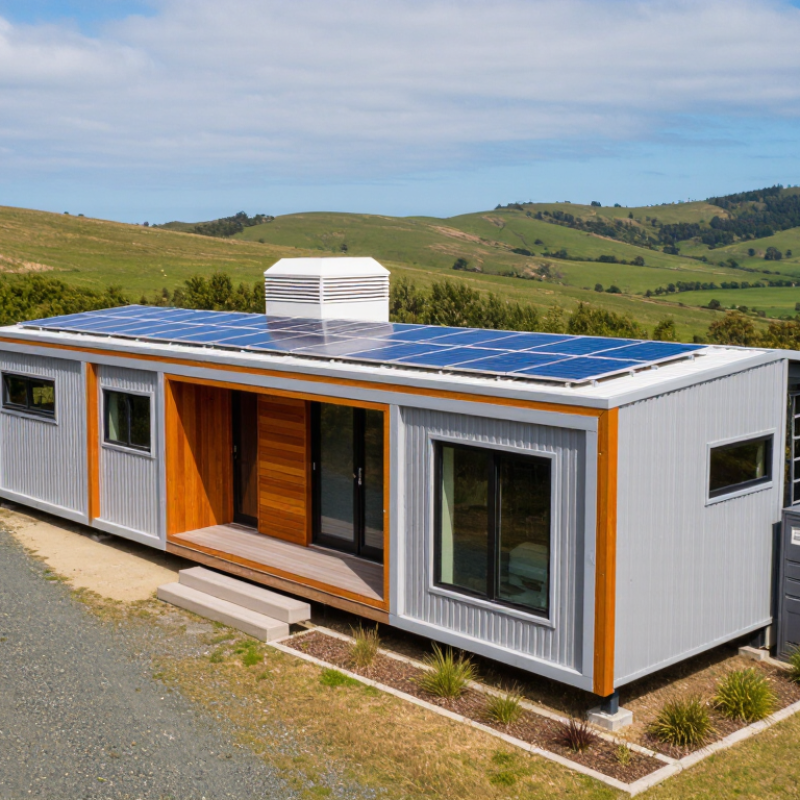
An off-grid prefab home is a factory-built dwelling designed to operate without a regular connection to public electricity, water, or sewer networks. Sections are made off-site, transported, and assembled on prepared ground. Its energy system may combine rooftop solar panels, battery storage, and a backup generator. Rainwater tanks, filtration, and on-site wastewater treatment can support daily use, depending on local conditions.
The scale of China’s clean-energy expansion offers useful context, but it does not guarantee a home can run independently. The International Energy Agency’s Renewables 2024 report expects China to account for nearly 60% of global renewable power capacity growth through 2030. Much of that growth is utility-scale or grid-connected. That distinction matters. A remote home still needs equipment sized for winter sunlight, cooking, heating, and several cloudy days.
Look closely at the battery capacity, insulation, and water plan, not just the floor plan. A compact home with a shaded roof may produce less power than its brochure suggests. The weak point is often maintenance: filters clog, batteries age, and snow can cover panels. A site survey and realistic energy-use estimate should come before choosing a layout. Even then, full independence can be imperfect. A small backup supply may still be sensible in harsh weather.
Solar, Water, and Waste Systems for Off-Grid Living
Off-grid prefab homes in China need systems matched to their location, not just a neat equipment list. Solar output can vary sharply between a sunny plateau and a cloudy coastal site. A roof-mounted array, battery storage, and an inverter should be sized around daily loads such as refrigeration, lighting, pumps, and heating. Cloudy weeks matter. Ask for an energy estimate based on real seasonal conditions, and leave room for future maintenance access.
Water planning starts with the source. A rainwater tank may suit some sites, while a well or delivered supply may be more practical elsewhere. Filtration and disinfection should reflect water testing, not guesswork. Keep a backup. In freezing areas, exposed pipes and outdoor tanks need protection; in dry regions, storage capacity becomes critical. Small details, like a screened tank inlet, can reduce debris and insect problems.
Wastewater needs equal attention. Depending on the site, a properly designed treatment unit or sealed holding tank may be appropriate, with professional review before installation. Greywater reuse can help with irrigation, but only when the system and local conditions support it. No setup is maintenance-free: filters clog, batteries age, and pumps can fail. I would rather see a modest, repairable system than an impressive package that nobody nearby can service. Check component warranties, service access, and operating costs before choosing a prefab home.
How to Compare Prefab Home Models and Chinese Manufacturers
Comparing off-grid prefab homes starts with the site, not the floor plan. A 40-square-metre cabin may suit a mild coastal area but need upgraded insulation in a cold, windy location. Compare wall and roof insulation, window specifications, and structural design for your actual climate. Ask whether the quoted model includes solar wiring, battery space, water storage, and plumbing, or only provisions for later installation. “Solar-ready” can mean very little without a clear equipment list.
When comparing Chinese manufacturers, request drawings, material schedules, and quality checks for the exact model being quoted. Ask how moisture protection, panel joints, and roof penetrations are handled; small gaps can become costly problems after assembly. Factory photos are useful, but inspection records and a documented sample order offer stronger evidence. Check whether the price separates the home, packing, shipping, installation support, and spare parts. Details matter more.
Compare warranties and after-sales response times in writing, including how replacement components are sourced. Ask for references from buyers in climates similar to yours, then confirm which features those buyers actually received. A polished brochure is not enough. I would still allow room for uncertainty: delivery schedules, site access, and local utility requirements can change the project budget. A simple comparison sheet with identical specifications makes differences easier to spot.
Buying, Shipping, and Installing an Off-Grid Prefab Home
Buying, Shipping, and Installing an Off-Grid Prefab Home
Buying an off-grid prefab home from China takes more than comparing floor plans and prices. Ask for detailed drawings, material specifications, insulation values, and clear packing dimensions. Confirm what the quoted price includes, such as interior finishes, wiring, and plumbing. A low initial price can leave important items out. Check whether the home suits your climate, site access, and intended energy use. A beautiful layout may still feel cramped once storage and equipment are added.
Shipping and installation need early planning. Ask a freight professional to estimate transport costs using the packed dimensions, destination, and delivery method. Then check whether trucks and lifting equipment can reach the site. Before production, have a qualified local professional review the foundation, structural requirements, and electrical setup. Off-grid systems need to match real demand; a small battery may not support heating, cooking, and lighting for long. Allow time for customs processing and weather delays. Schedules can slip, even with careful planning.
Tips: Request recent production photos and a written list of exclusions. Keep a contingency budget. Measure the access road yourself, including narrow turns and overhead obstacles. Keep copies of drawings and inspection records. And be realistic: some site work may cost more than expected.
Shipping Dimensions for Common Prefab Home Modules
Standard 20-foot and 40-foot containers share a nominal exterior width and height, while the 40-foot unit is twice as long. These approximate ISO container dimensions are useful for early shipping and site-access planning; prefab home modules may have different dimensions.